
The Chiffchaff – Phylloscopus collybita
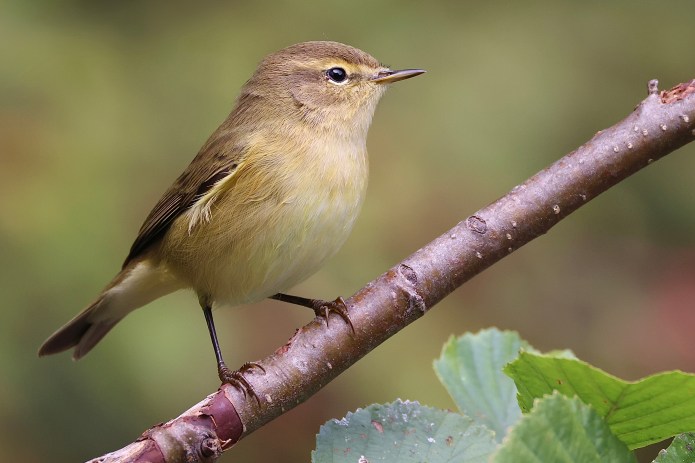
The Chiffchaff , Phylloscopus collybita is a small leaf warbler, with a plain olive green plumage with brown hints and buff underparts. Chiffchaffs are almost indistinguishable from Willow warblers and the two birds are often confused. It is about the same size as a Blue tit and has many similar behaviours to a tit being energetic, lively and quick, especially when among trees and shrubs. In fact, the Chiffchaff is famed for its distinctive, quick tail-wagging movements.
The chiffchaffs have a life expectancy of two to eight years.
Both females and male Chiffchaffs are similar in appearance; the only discernable difference is that the female is slightly smaller than male. The best chance of observing a Chiffchaff is by visiting a lowland woodland area, although they do sometimes visit parks and gardens. Listen for their song (chiff-chaff, chiff-chaff) as they tend to dwell high up trees at the top, especially in wooded areas. Watching the Chiffchaff can be difficult, as they are quick and relatively well-hidden birds.
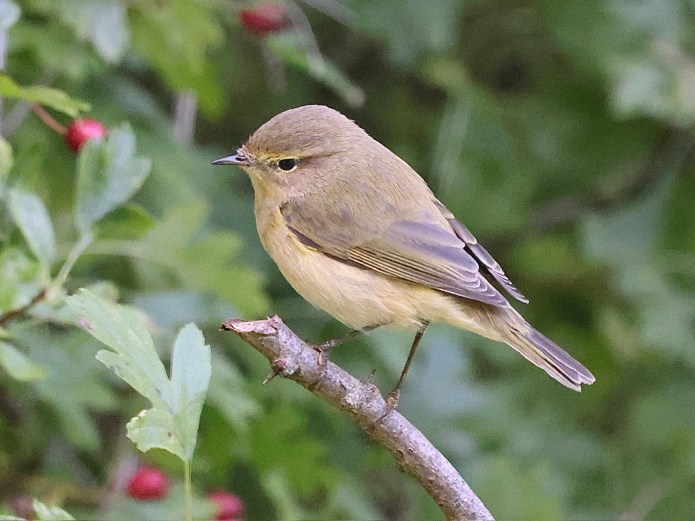
Chiffchaffs are insectivorous birds, and prefer leaf insects such as caterpillars, gnats and midges. In fact, the term Phylloscopus means “leaf explorer”, as Chiffchaffs tend to feed on the undersides of leaves where aphids congregate due to the build up of sugary sap.
Chiffchaffs that stay here for the winter often spend these months at waste treatment plants. These plants provide a warm microclimate and a plentiful supply of invertebrates.
They are also considerably keen on flies. In fact, so good is their aerial performance, they can feed mid-flight. These small birds require about one-third of their weight in insects daily, and they feed almost continuously in the autumn.

Male chiffchaffs arrive several weeks before females to choose and defend a territory before the females arrive and choose a mate. They begin their breeding process between April and May. In any typical year, there can be up to two clutches produced, each containing between four-nine eggs, after which there is an incubation period of fourteen days. For a young Chiffchaff to fully fledge, around fifteen days is required.
During the breeding season the male chiffchaffs become so inquisitive and fearless that may attack even dangerous predators like the stoat if they approach the nest, as well as egg-thieves like the Eurasian jay.
The female builds the nest, which is dome-shaped and often located near the ground, in tall grass, bushes or wall-creeping plants. In terms of parental care, male Chiffchaffs are not particular considerate fathers, they share at best an even share of responsibility, but for a large portion of the time it is the female that bears the responsibility for feeding young chicks.
Fact File
Wing span 15-21 cm
Weight 6-12 g
Breeding pairs 1,200,000
Length 10-11 cm
Lifespan Average 2 years
Status Green

Conservation status
Classified as Green in the UK under birds of conservation concern .they have seen a near 200% increase in numbers over the past few years (1995-2024) As with most wildlife in the uk the Chiffchaff is protected under the wildlife and countryside act , 1981.
Chiffchaffs are doing well in the UK, threats such as climate change and habitat loss can impact the population. Climate change has led to drought in the chiffchaffs’ wintering ground in Northern Africa. This means that there is not enough food for them to recover from their migration or prepare for the next one. In the UK the loss of woodland habitats could drive a decrease in the population of chiffchaffs.
©️ wildonline.blog , all rights reserved


