
The Otter – Lutra lutra
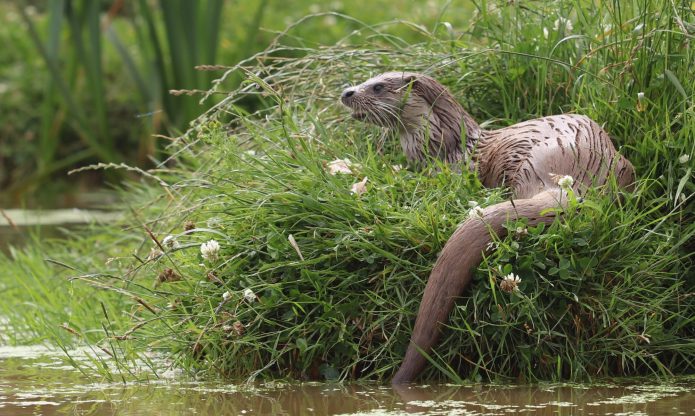
The Otter is Britain’s largest member of the Weasel Family , leading an amphibious lifestyle in our rivers, lakes and river estuaries. By the 1960s they were on the verge of extinction due to river pollution, habitat loss and hunting. Now with legal protection, cleaner rivers and managed habitat it is returning to former haunts with a slow but steady population growth.
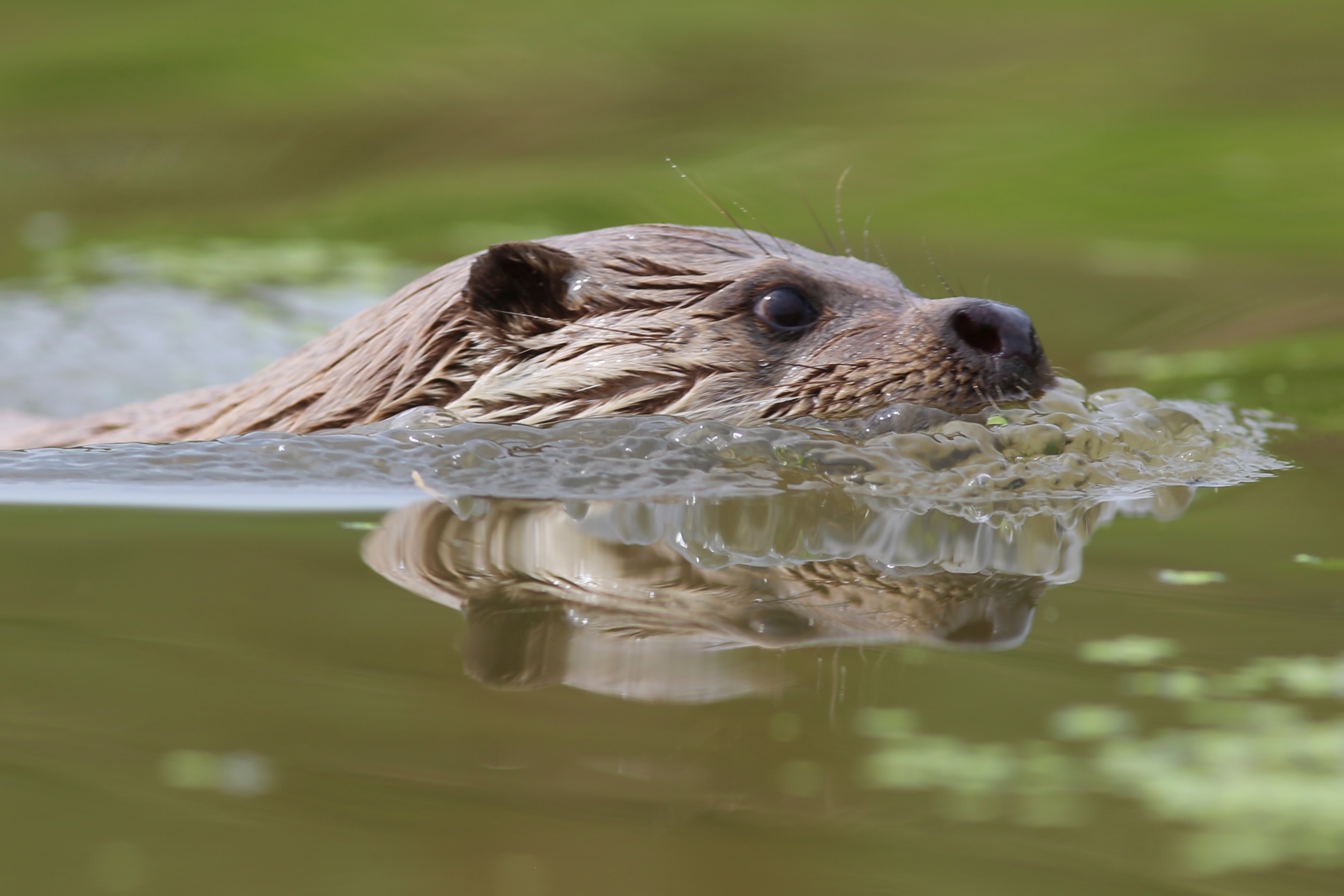
The male otter ( dog ) and the female ( bitch ) have large lungs and can stay submerged under water for 4 minutes, often swimming 400 metres before resurfacing. The otter is well suited to a life on the water as they have webbed feet, dense fur to keep them warm and can close their ears and nose when underwater. They can reach speeds of 10 miles per hour under water and can easily out run a man on land.
Coastal otters are sometimes called ‘sea otters’, but they are exactly the same species as the animals that live further inland. Mainly active during the day, coastal otters generally have much smaller home ranges than their riverine counterparts, because of the abundance of fish and crustacean prey in inshore waters. Otters must keep their fur free of salt using freshwater for it to remain effective as insulation.
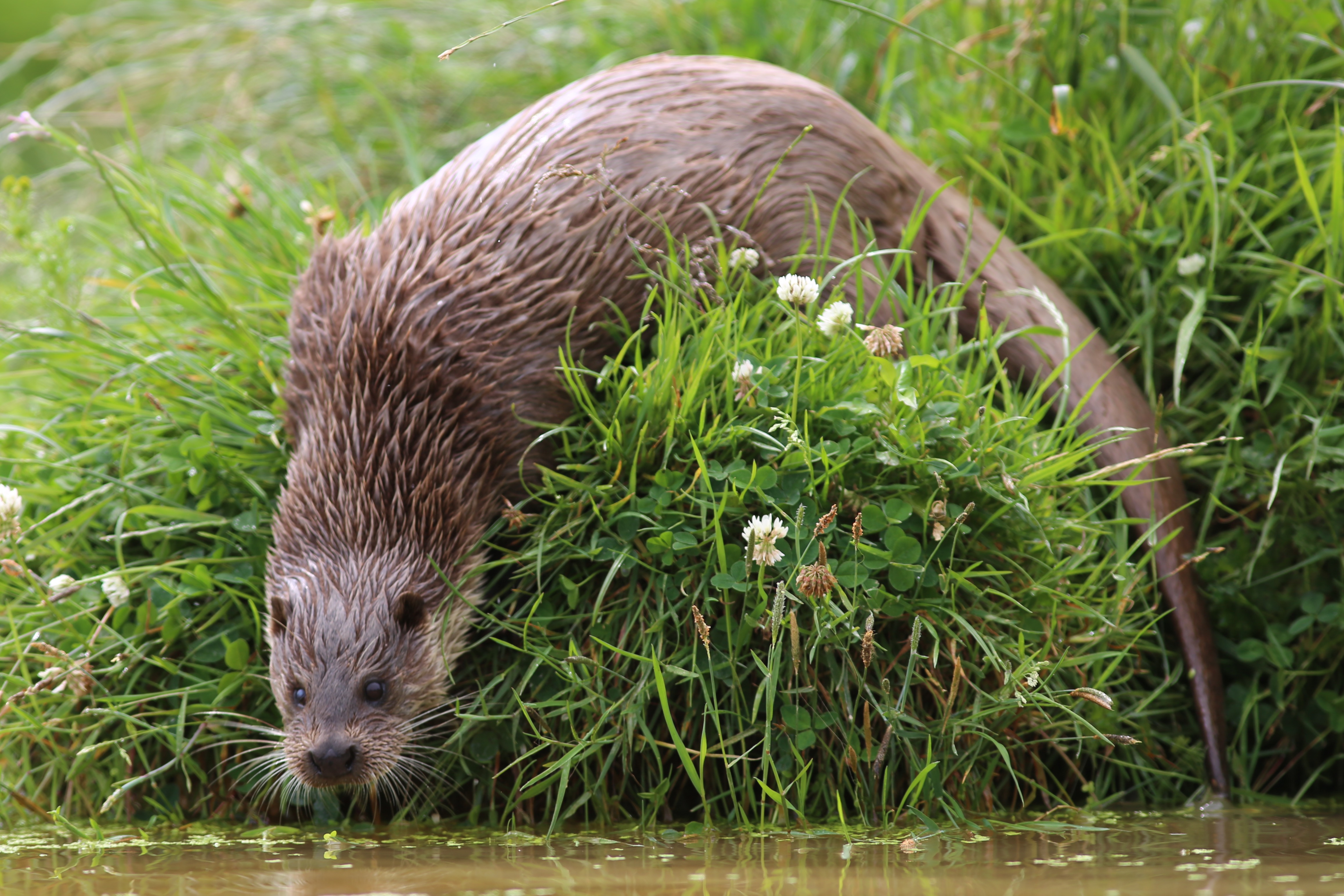
They communicate via whistles, twittering noises and spitting sounds, which can be heard at night when it is quiet and still. They also communicate using spraint. Over 100 different scent components of otter dropping have been identified. About 17 of these are thought to contain information on sex and even individual recognition, which can be used by other otters.
The males occupy large ranges, which may include up to 20 km of river bank and daily travel long distances along regular routes by the margins of the river. The young or cubs are normally born in the spring and arrive in the world blind and dependant on their mother, suckling for up to 6 months. The mother normally cares for the cubs alone, living in a nest or holt , lined with grass and bedding. The young don’t normally take to the water until they are 3 – 4 months old.
Fish, especially eels and salmonids are eaten, along with crayfish at certain times of the year. Coastal otters in Shetland eat bottom-living species such as eelpout, rockling and butterfish. Otters occasionally take water birds such as coots, moorhens and ducks. In the spring, frogs become an important food source . Otters normally take their prey to land to eat.
Conservation status
Otters are protected by the Wildlife and Countryside Act (1981) and cannot be killed, kept or sold (even stuffed specimens) except under licence. In the late 1950s and early 1960s otters underwent a sudden and catastrophic decline throughout much of Britain and Europe. The cause was probably the combined effects of pollution and habitat destruction, particularly the drainage of wet areas. Otters require clean rivers with an abundant, varied supply of food and plenty of bank-side vegetation offering secluded sites for their holts. Marshes are also be very important habitat, for raising young and as a source of frogs.
While otters completely disappeared from the rivers of most of central and southern England in just 50 years, their future now looks much brighter. There is evidence that in certain parts of the UK the otter is extending its range and may be increasing in numbers . Otter populations in England are very fragmented and the animals breed only slowly.
©️ wildlonline.blog 2025 , all rights reserved.


I love them in my local river. I will take them any day over the beaver 🙂
LikeLike
Definitely , but its also good to see the beaver reintroduced ….
LikeLike
You are welcome to all that have destroyed our town 🙂
LikeLike
I love that Otters are protected, and these are lovely photo’s Peter… Thank you for more information upon them.. Xxx…
LikeLike