
The Sika Deer – Cervus nippon
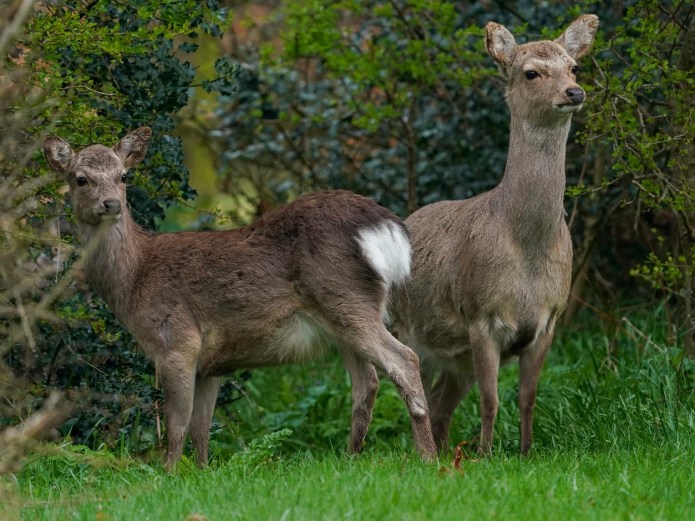
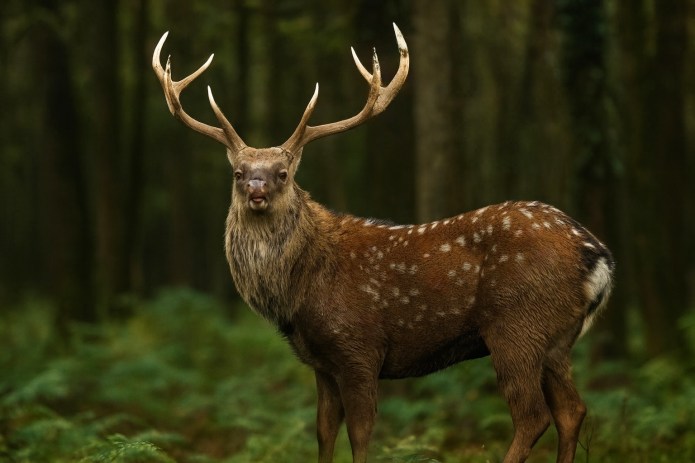
Sika deer were introduced to the UK in 1860 by wealthy land owners in Scotland . Originally native to the far east most wild Sika deer are in fact dependents from captive Japanese Sika . Sika are similar to fallow deer in coat colour. They vary from pale yellow/brown through to red/brown with white spots in the summer months to dark grey and black in the winter. Sika are renowned for their repertoire of calls. From groaning stags to clacking noises, whistles and screams. Both sexes bark when alarmed.
Male sika are called stags, females hinds and the young calves
The preferred habitat is coniferous woodlands and heaths on acid soils. The distribution of sika deer widespread in Scotland and is still expanding. The population in the rest of the UK is patchy and there is a small amount of Sika in Northern Ireland.
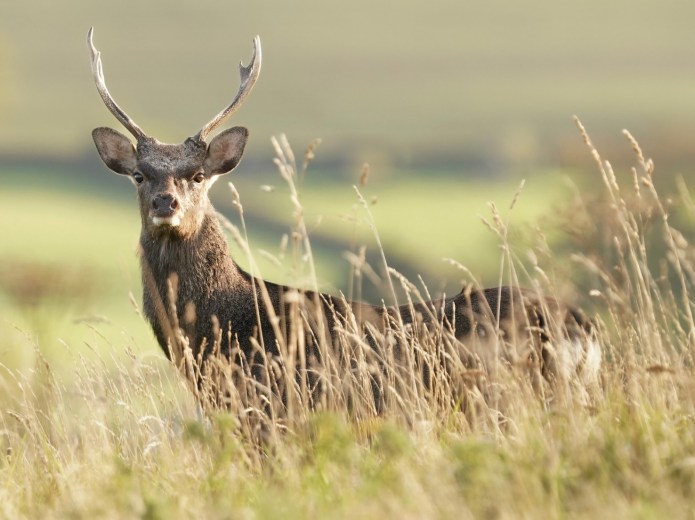
Sika deer graze on grasses and shrubs, with heather being a preferred choice although coniferous tree shoots and tree bark may occasionally be taken in small quantities. Browsing of tree shoots and agricultural crops and bark stripping puts sika in conflict with farmers and foresters due to economic damage.
When fully grown stags weigh between 40 to 70kg and hinds 30 to 45kgs.
The breeding season is normally from the end of September to November. The environment has a strong influence on mating strategy. Typically stags defend a rutting territory, much like fallow deer, and they may also switch to harem-holding when a group of hinds has been assembled. Less typically, males may congregate to form a lek or may simply wander throughout the hinds’ range in search for receptive hinds. A single calf is born during early May to late June after a gestation period of 7 ½ months. The mother hides her fawn in thick undergrowth immediately after giving birth, and the fawn stays very quiet and still while it waits until the mother returns to nurse it. The fawn becomes independent 10 to 12 months after birth and can live, exceptionally, up to 18 years. Sika deer live in single sex groups for most of the year, only coming together during the breeding season and in winter when times are harder.
Conservation status
Sika deer are a non native species listed under Schedule 9 of the Wildlife & Countryside Act (making release illegal )
In the UK, all wild deer species, including the Sika deer are protected under the Deer Act 1991 (and the Deer (Scotland) Act 1996 in Scotland). This legislation primarily regulates how and when deer can be managed or humanely culled, rather than making them a fully protected.The law prohibits illegal activities like poaching and the use of certain inhumane methods of killing. It also mandates “close seasons” during which female deer are protected while pregnant or raising young, and male deer are protected while their antlers are growing.
©️ wildonline.blog 2026 , all rights reserved / Image copyright John Kearns @ CJK


Beautiful images… Wishing you a very Happy New Year Peter x
LikeLiked by 1 person
Thank you Sue , happy new year
LikeLiked by 2 people