
The Green Woodpecker – Picus viridis
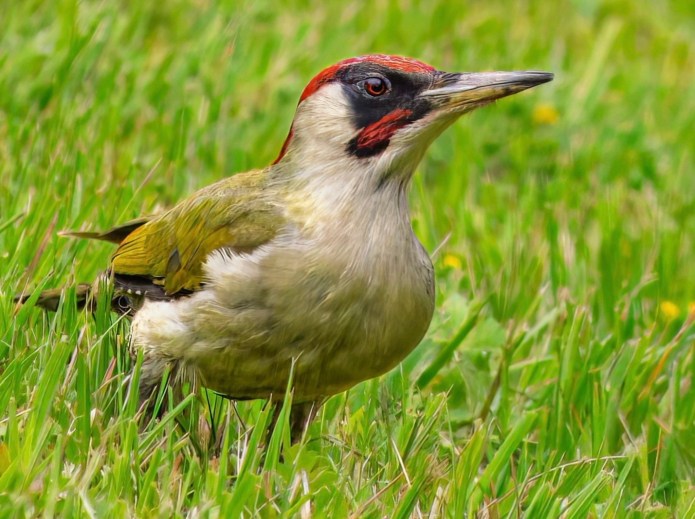
The Green Woodpecker – Picus viridis is one of three native species of Woodpecker native to the U.K ( the other two species are the Lesser Spotted and Great Spotted Woodpecker ) The Green Woodpecker is the largest of the three woodpecker species with a wingspan of around 40-42 cm and weighs between 170-250g. It’s one of the easiest birds to recognise , with dark green wings , a paler breast and a yellow rump that is evident in flight. The cheeks are black with a prominent red cap on top. Males have a red streak below their cheeks which is absent in the female bird.
Green woodpeckers rarely drum on trees like other woodpecker species.
The Green Woodpeckers can be found throughout England and Wales. They are absent from the far north of Scotland and the whole of Ireland. The species requires trees for nesting and open ground for feeding on their preferred diet of ants. So it follows that an open area close to woodland are going to provide your best chance of seeing the Green Woodpeckers in the wild. The green woodpecker has a distinctive ‘laughing’ call that is a clear giveaway one is nearby. Fieldcraft is important , if you get too close, these shy birds will flee at the first hint of perceived danger.
They have a long, sticky, and barbed tongue stretching up to 10 cm to scoop ants out of underground nests. A single bird can eat around 2,000 ants a day
The Green woodpecker’s diet is dominated by ants. It catches the insects by probing the ground with its powerful beak and sucking them up with its long, sticky tongue. Other invertebrates may be taken occasionally.
The laughing call earned the bird the traditional country name “yaffle” or “yaffingale”, which inspired the character Professor Yaffle in the children’s television show Bagpuss.
During the winter male and female Green Woodpeckers live separately but stay in the nesting area all year round. In spring, the birds call loudly and begin to visit each other. The breeding season between April and August. During courtship, the male flies in a spiral fashion round tree branches. When males fight over a female they sway their heads from side-to-side, wings spread out, tails fanned and crests raised. Green Woodpeckers nest in holes in trees with either a winter roost hole chosen or a new hole excavated by both the male and female bird. Old mature deciduous trees like oak, beech, willow, and fruit trees are chosen , often with dead or decaying timber.
The average lifespan of a Green Woodpeckers in the wild is around 5 years.
The nests are unlined. Four to six eggs will normally be laid, hatching after around three weeks. Both male and female share the incubation of the eggs, which takes 17-19 days, and they both feed the young for about 19 days. When the brood leaves the nest the parents may split up, each caring for 3 or 4 youngsters until they can fend for themselves. The young woodpeckers can fly within three or four weeks after hatching. They are capable of breeding at a year old.
Conservation status
The Green Woodpecker is classified in the UK as green , least concern on the Birds of Conservation Concern list . However isn’t should be noted that recent monitoring by the British Trust for Ornithology showed a decline of around 135 from 1995 to 2024. The primary threats are habitat loss and changes in agricultural practices that reduce their primary food source. The Like most wildlife they are protected in law by the Wildlife and Countryside Act 1981.
©️ wildonline.blog 2026 , all rights reserved


1 reply »