
The Painted Lady – Vanessa cardui
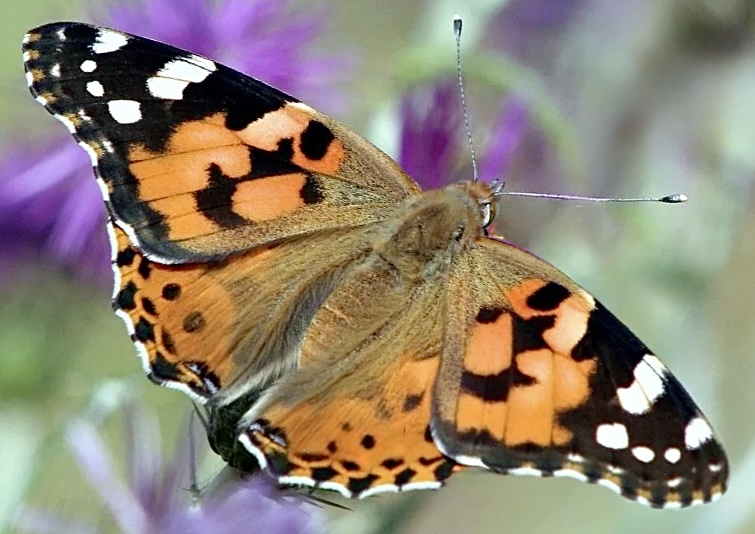
A large orange, black and white butterfly, the painted lady is a regular visitor to the UK from North Africa, the Middle East and southern Europe arriving during the summer; sometimes in enormous numbers. A frequent garden visitor and feeds on Buddleia and other flowers. The caterpillars feed on thistles, mallows and Viper’s-bugloss, as well as various cultivated plants. This species is a true visitor to our shores and is unable to survive our winter weather.
The painted lady is one of the most widespread species of butterfly, found right across the world.
The painted lady is mainly orange above, with black tips to the forewings that are adorned with white spots, and black spots on the hind wings and forewings. The small tortoiseshell is also orange with black spots, but has distinctive yellow spots on the forewings and blue spots along the wing margins.
The migration of the painted lady butterfly involves an extraordinary journey spanning over 9000 miles from Africa to the Arctic and back. This journey is characterized by multiple generations of butterflies traveling across continents to exploit seasonal resources and breeding opportunities. Unlike many other migratory species that follow a predictable seasonal pattern, painted lady butterfly migrations do not adhere to a strict schedule. Instead, these migrations are triggered by favorable environmental conditions and the availability of suitable food sources. Painted lady butterflies are highly adaptable and can respond quickly to changes in their environment, allowing them to undertake migrations at different times of the year as conditions dictate.
The migration of painted lady butterflies typically spans multiple generations, with each generation playing a specific role in the overall journey. The journey begins with the emergence of adult butterflies in Africa, where they breed and produce successive generations of offspring. As these butterflies migrate northward, they continue to breed and lay eggs along the way, with subsequent generations continuing the journey. It may take approximately six generations of butterflies to complete the migratory cycle from Africa to the Arctic and back.

The relatively short lifespan of Painted Lady butterflies ( approx 2 weeks )places an emphasis on efficient reproduction within the limited time available to them as adults. This short lifespan is due to various factors, including predation, environmental stressors, and the energetically demanding process of reproduction.
Given their brief adult lifespan, Painted Lady butterflies must maximize their reproductive success during the time they are active. This often involves mating multiple times and laying multiple batches of eggs. By producing a large number of offspring, individuals increase the likelihood that at least some of their offspring will survive to adulthood and continue the next generation.
©️ wildonline.blog 2026 , all rights reserved


Yes I love these butterflies, and my Buddleia has had a variety this year too, which is very encouraging, Lots of Cabbage White, and common Brown .. No Peacock butterflies have I seen this year…. But a few little common blue I have had in the garden too…
Lovely photos Peter xx
LikeLike
Thank you Sue
LikeLike