
The Red Kite – Milvus milvus
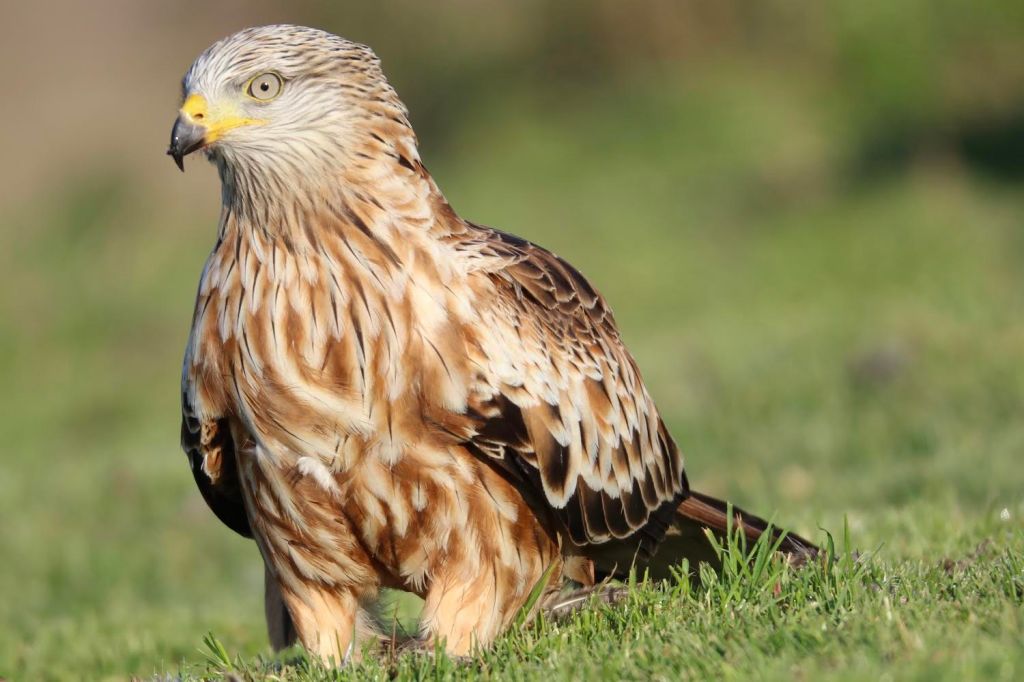
by Graham Stewart
The Red kite is yet another bird of prey that was persecuted to the point where it became extinct in both Scotland and England by the 1900’s and by the 1930’s only 2 breading pairs were thought to remain in Mid Wales. Such was the concern for these beautiful birds that the army was brought in to protect the remaining nest sites.

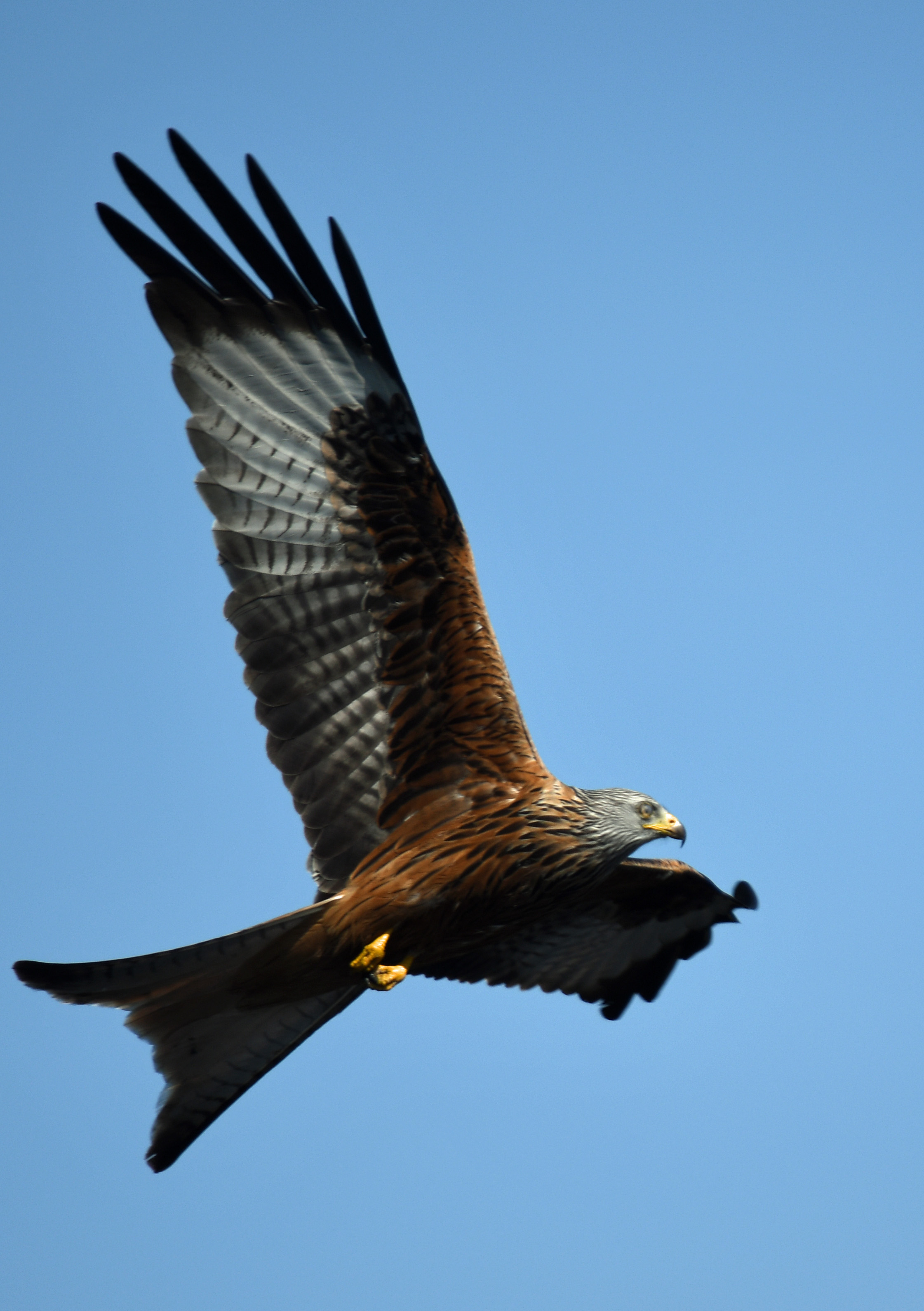
Following a successful reintroduction programme between the RSPB, Scottish Natural Heritage and English nature populations across the UK are expanding rapidly. In flight this large bird of prey with a wing span of up to 1.75 metres and weighing in excess of a kilo can be distinguished from other birds of prey by its forked tail, white under wing patches and black flight feathers.

Diet
The Red Kite requires open land to search for food and can be seen soaring effortlessly, primarily looking for animal carrion although they are known to also take live prey such as small mammals, birds and invertebrates. Despite their impressive looking beak and talons the Red Kite is not a particularly strong bird and will often require another bird such as a crow to break through the carcass before it can feed. It is also common to see Kites following tractors as they plough the land as this exposes worms which are a popular food source during the breeding season. The kite is capable of feeding on the wing and can be spotted passing food from its talons whilst in flight.

Nest
A large nest made of sticks, earth, rags and other rubbish lodged in the fork of a tree. Both sexes continue to add material to the nest during the incubation and nestling periods. Nests vary greatly in size and can become large when the same nest is occupied for several seasons.

Breeding
Red Kites are generally monogamous and will mate for life. They will start breeding in their 2nd or 3rd summer and will produce 1 brood of 2-4 eggs around April. Eggs are incubated for approx. 30 days. The young leave the nest after roughly 7 weeks but will rely on their parents for food for about 1 more month.
Conservation & Threats
The Red kite is a real conservation success story that has now come full circle. Almost extinct in the uk , chicks were reintroduced from Spain ans Sweden. The population in the uk is now estimated at more than 4,000 breading pairs and we are now sending chicks back to the wilds of Spain to help protect the species recover there. Classed as being on the green list (least critical group) on the Birds of conservation concern list the Red Kite is fully protected under the Wildlife & Countryside Act 1981. Threats in the form of poison bait left out for foxes and crows and rats that have been poisoned are all highly dangerous to the Kite due to its scavenging nature. Despite its protection status egg collectors also still pose a threat.
Facts
©️ wildonline.blog 2026 , all rights reserved / photos & words © Graham Stewart


 Wildonline.blog
Such beautiful birds… And I am so pleased they didn’t go extinct here.. I didn’t know they could live that long either….
While I know we get Sparrow Hawks here quite often.. and I have photographed them sitting on my fence and unfortunately for one sparrow, feasting on my lawn.. We get buzzards too…
I was paying attention to the wing formation… So if ever I have to try identifying one…
Do you know if any are in the Sherwood Forest Area? I wonder… ?
LikeLike