
The Wood Pigeon – Columba palumbus
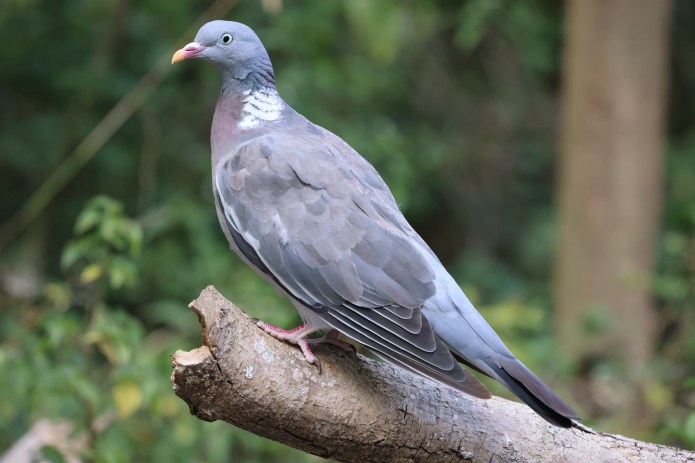
The Wood Pigeon is both he largest and most common pigeon , mostly Rey in colour with a white , green and purple neck and distinctive whit stripes on its wings. Although shy in the countryside it can be tame and approachable in towns and cities. Its cooing call is a familiar sound in woodlands as is the loud clatter of its wings when it flies away. In Britain populations are largely sedentary, seldom moving more than 10 miles from where they hatched, but northern European birds are strongly migratory, moving south towards the Mediterranean every autumn.
In winter the pecking rate when feeding increases from around 70 pecks a minute in the morning to over 100 before going to roost
The nest is a simple untidy platform of twigs, usually built in a tree, where trees are in short supply these adaptable birds will build inside buildings, or even on the ground. A female never normally lays more than two eggs in a clutch, but she may lay as many as six repeat clutches in a year if she loses her eggs. It takes 17 days for an egg to hatch, and a further 30 to 34 days for the chick to fledge.

Wood pigeons are not fussy eaters and will eat almost anything put on a bird table. Their size allows them to dominate food sources and push away smaller birds with ease. Wood pigeons feed their young on a milk-like liquid secreted from their crops. This enables them to use foodstuffs other than invertebrates, to produce the protein needed by developing chicks. Although they can be greedy feeders, taking large amounts of food put out for other garden visitors, they are an interesting species and well worth watching. They also drink a lot of water because of their relatively dry diets, however, They only drink from open places, like bird baths.
Oilseed rape is a favourite winter food, and partly explains why these birds are thriving in the modern countryside
Adult pigeons are skilled at avoiding predators , mainly birds of prey such as peregrines and female sparrowhawks. Wood pigeon eggs in nests are at risks from jays, magpies and crows as well as grey squirrels and weasels . The young are vulnerable, with reports of rats, weasels and stoats raiding nests. Classified as green in the UK under birds of concern , as with most wildlife in the UK the wood pigeon is protected under the wildlife and countryside act , 1981
©️ wildonline.blog 2025 , all rights reserved


 Wildonline.blog
I presume this is the same common pigeon we have here in the US. I love how their color is iridescent in the sunlight. Thank you for teaching us about wildlife.
LikeLike
Thank you for your comments, makes the blog worthwhile, yes it’s the same bird you have in the us.
LikeLiked by 1 person
Thanks for this super post on what I consider a super bird. If they were rare and on the verge of extinction they would probably be more venerated. Great posts by the way.
LikeLike
Thank you
LikeLike