
Herring Gull – Larus argentatus
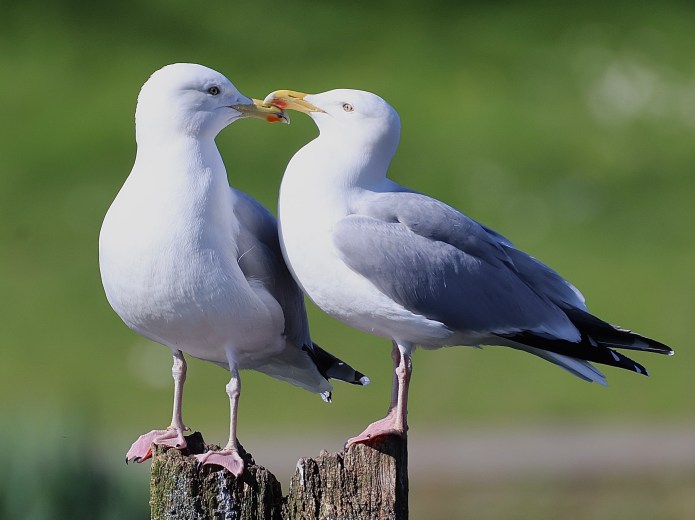
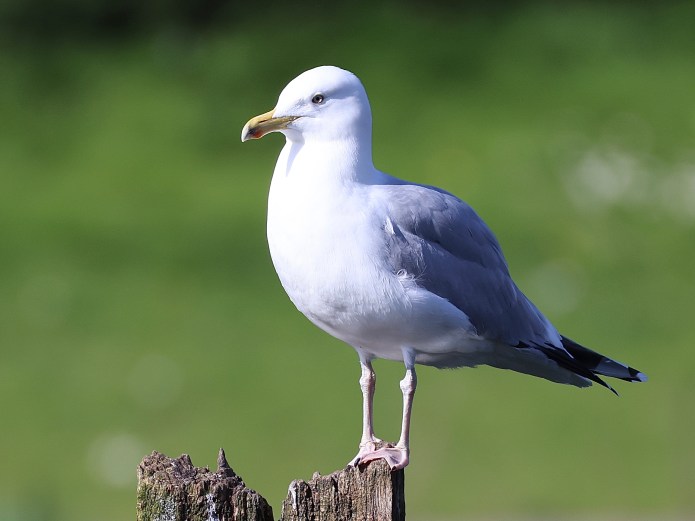
If you can see a sea gull , it’s very likely going to be a Herring Gull you are watching. jumps to mind. The Herring Gull is one of 12 gull species in the UK and the second largest of the regular UK lineup. Herring Gulls are large, noisy birds found throughout the year around our coasts and inland around rubbish tips, fields, large reservoirs and lakes, especially during winter. Adults have light grey backs, white under parts, and black wing tips. Their legs are pink with webbed feet and they have heavy, slightly curved bills marked with a red spot. Young birds are mottled brown. Their name is a bit of a false herring as well , they don’t particularly favour herring. So it’s more likely the name originally came from the colour of the bird’s back and wings, which are silvery, resembling the colour of herring.
It takes four years for young herring gulls to turn from brown and mottled to having full adult feathers.
They are omnivores and opportunist feeders with half of the birds diet coming the likes of garbage dumps, landfill sites, and sewage outflows. It will also steals eggs and young of other birds as well as seeking small prey. The gulls can frequently be seen to drop shelled prey from a height to break the shell. Vegetable matter like roots, seeds, grains, nuts, and fruit are occasionally part of their diet.
Herring gulls may pair up for life, provided the couple is successful in hatching their eggs. Two to four eggs, usually three, are laid on the ground or cliff ledges in colonies, and are defended vigorously by this large gull. The eggs are usually olive-brown in colour with dark speckles or blotches. They are incubated by both parents for 28–30 days. The chicks hatch with their eyes open, covered with fluffy down, and they are able to walk around within hours. The young birds are able to fly 35–40 days after hatching and fledge at five or six weeks of age. Chicks are generally fed by their parents until they are 11–12 weeks old, but the feeding may continue for more than six months of age if the young gulls continue to beg. Herring gulls are long-lived, with a maximum age of 49 years being recorded.
They have a distinctive red spot on their yellow bill, which chicks peck at to encourage their parents to feed them.
Herring gulls are protected in the UK by the Wildlife and Countryside Act 1981 , making it illegal to injure, kill, or take the birds, or damage their nests and eggs. Red-listed. These resourceful birds are brilliant at finding food. But as our oceans are becoming a less reliable hunting ground because of human impact, gulls are having to forage further afield. This explains why the ‘seagull’ is no longer bound to UK beaches. As a result, the Herring Gull’s population has plummeted, despite these birds seemingly being a regular sight.
©️ wildonline.blog 2026 , all rights reserved.


 Wildonline.blog