
The Water Vole – Arvicola amphibius
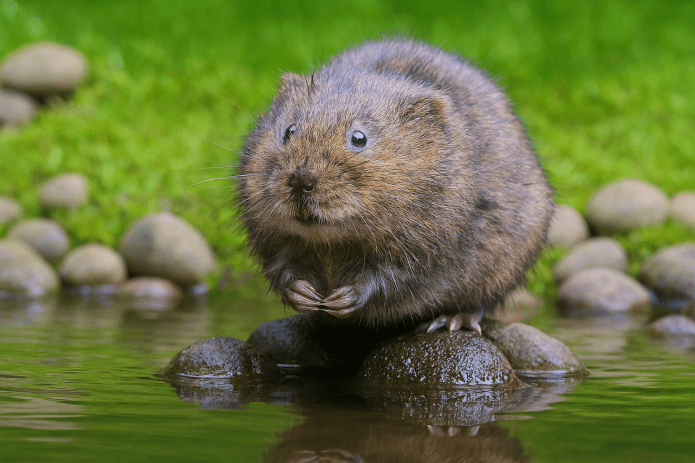
Water voles are the largest species of vole in Uk. Similar in size and often mistaken for a Brown Rat , they make their home on the banks of rivers , lakes and canals . Their resemblance to the rat has given them local names such as the water rat or water dog. They live in Burrows 4-8cm diameter in river banks with the entrance just above the water line.
Water voles need to eat 80% of their body weight every day
The Water vole has a glossy brown or black fur and are about 20cm long and weigh up to 300g . They have a blunt muzzle with small, black eyes. Their ears are rounded and almost hidden, and they have a dark, slightly furry tail. They are mostly active during the day, sitting on their hind feet and feeding on grass stalks held in their front paws. If they are disturbed, they dive into the water with a characteristic ‘plop’ sound. When they swim, their head and back are visible. The average lifespan is only around 2 years.
They feed on reeds, grasses, water plants and wetland plants in the spring and summer and roots, rhizomes, bulbs and bark in the autumn and winter. Very occasionally insects and other invertebrates are eaten. In studies it was found that 227 species of plants were identified in their diet. During pregnancy, female water voles may supplement their diet with protein-rich pollen from flowers, as well as invertebrates and small fish.
Water voles absent from Ireland and most British offshore islands except Anglesey, the Isle of Wight and the Sound of Jura Islands
Water voles live in colonies spaced out along a watercourse. Breeding females have territories of 30-150m and fiercely defend them, while males have larger home ranges of 60-300m which overlap those of several females. Mating starts in March and goes on until October. Females produce between two and five litters annually each of two to eight young. Young leave their mother after 28 days. Juvenile water voles need to weigh at least 170g to survive winter.
Conservation status
The Water Vole is an endangered species here in the UK , numbers have declined by up to 90% primarily due to habitat loss and predication br the American Mink. They are a priority species under the UK Post-2010 Biodiversity Framework. Like most wildlife here in the they are fully protected in law by the Wildlife and Countryside act 1981, Schedule 5 of this Act makes it an offence to intentionally damage or obstruct access to water vole burrows. They are also Red listed on the UK List for Mammals.
©️ wildonline.blog 2026 , all rights reserved


 Wildonline.blog
Cute!
LikeLike