
The Chalk Hill Blue – Polyommatus coridon
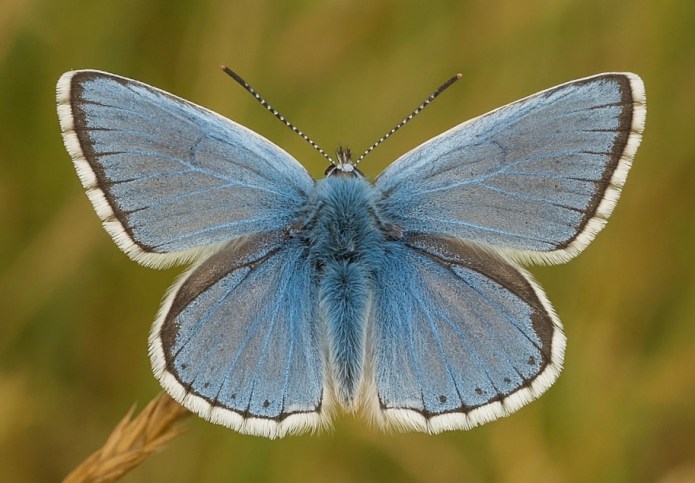
The Chalk hill Blue is a common chalk downland butterfly. Male Chalk Hill Blues have pale blue upper sides, a wide brown margin to the wings, and a white border which is chequered with broad dark marks that cross the whole of the border. Female Chalk Hill Blues are chocolate-brown and also have a distinctive chequered border.
The lifespan as a winged adult is relatively short, typically seen from July to early September, meaning adults live for only a few weeks.
The larval food plant is horseshoe vetch and the adults often feed on knapweeds and scabiouses.
The Chalk hill Blue butterfly has a one-year life cycle , starting as an egg laid on horseshoe vetch in late summer, overwintering, hatching in spring, and feeding as a caterpillar with ants for protection, then pupating near the ground before adults emerge in July/August, feeding on nectar, and laying eggs to restart the cycle.
Conservation status
The Chalk hill Blue butterfly’s UK status is generally considered stable nationally after historic declines, but it’s a Species of Conservation Concern locally rare. As with most wildlife here in the UK it is protected under the Wildlife and Countryside Act, 1981.
©️ wildonline.blog 2026 , all rights reserved


 Wildonline.blog
Awesome 👍
LikeLike
Beaut 😊
LikeLike
Pretty!
LikeLike