
The Bearded tit – Panurus biarmicus
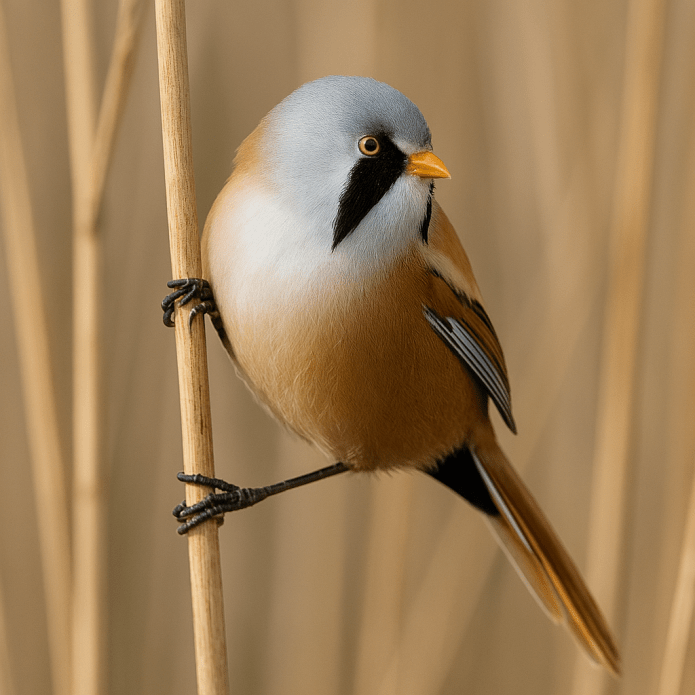
Bearded Tits can be found year-round across England, Wales and the Tayside area of Scotland. Their long tail, rich auburn plumage, grey head and black moustache stripe are distinctive. These birds are the UK’s only resident reedbed specialists and are found within nature reserves containing reedbed habitats. The average lifespan in the wild is around 3 years.
The bearded tit is also known as bearded reedling or bearded parrotbill
Male bearded tits are a cinnamon brown colour with a grey breast and head, with the characteristic black moustache and clear orange bill. Females and juveniles have cinnamon brown back and head with a grey breast. Both have black, white, and brown flight feathers on their upper wing and a long tail, which helps them balance as they perform their distinctive straddle. They are slightly bigger than a long-tailed tit. They are mostly active in the morning in dry conditions when they can be heard making a ‘ping’ call as they zoom between reeds or performing a split between the reed stalks.
Bearded tits typically start to breed from late March to August.They lay their eggs in well-hidden nests within the reed beds, ensuring protection from predators and harsh weather conditions. A female Bearded Tit usually lays between 4 to 8 eggs per clutch.. The eggs are incubated by both parents, who take turns keeping them warm and safe. The eggs typically take 10 to 14 days to hatch. Both parents share incubation duties, although the female tends to spend more time on the nest. Bearded Tit chicks fledge approximately 12 to 16 days after hatching.
They are prolific breeders that can have up to four broods a year, with four to eight eggs per brood!
The diet of a Bearded Tit changes significantly during the year.. During spring and summer, when insects are abundant they primarily feed on small invertebrates, including insects like midges, flies, and beetles, along with their larvae. As autumn arrives they transition to a seed-based diet. Reed seeds become their primary food source, which they consume in large quantities. This seasonal dietary shift is not just a survival mechanism but also plays a vital role in their habitat, as their foraging helps disperse seeds and maintain the health of reedbeds.
Conservation status
Listed in the UK as Green under the Birds of Conservation Concern 5: the Red List for Birds (2021). Like most wildlife here in the uk the Bearded tit is protected in law under the Wildlife and Countryside Act, 1981.
©️ wildonline.blog 2026 , all rights reserved


 Wildonline.blog
Beautiful specimen. Thanks for sharing 🙂
LikeLike