
The Brambling – Fringilla montifringilla
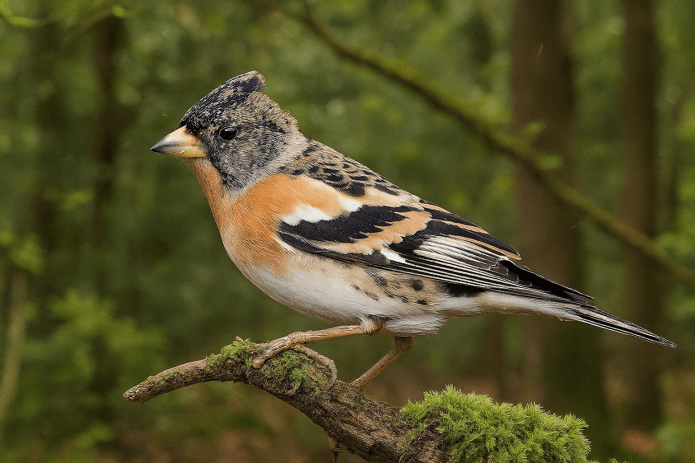
Bramblings are the same size and shape as a chaffinch. In their summer breeding plumage, males have a glossy black head and back, but in winter the black feathers are hidden by pale fringes, giving the head and back a more mottled black and brown appearance. Females have a brown and grey head, with two distinct black lines running across the top of the head and down the nape.In flight, bramblings are easily spotted amongst a flock of chaffinches by their bright white rump. They also have rusty buff-coloured markings on their wings and an almost all black tail.
The Brambling, sometimes known as the “mountain finch,” is a remarkable migrant, travelling great distances from Scandinavia and Northern Europe to spend winters in the UK
Bramblings are usually found in flocks, regularly joining up with chaffinches and other finches in places where plenty of food can be found. They’re often found in woodlands, hedgerows and stubble fields, and will sometimes visit garden bird feeders. They spend the summer nesting in the forests of northern Europe and Asia, though pairs occasionally nest further south, including in northern Britain. At the end of the breeding season, they move south in huge flocks. Average lifespan is around 8 years.
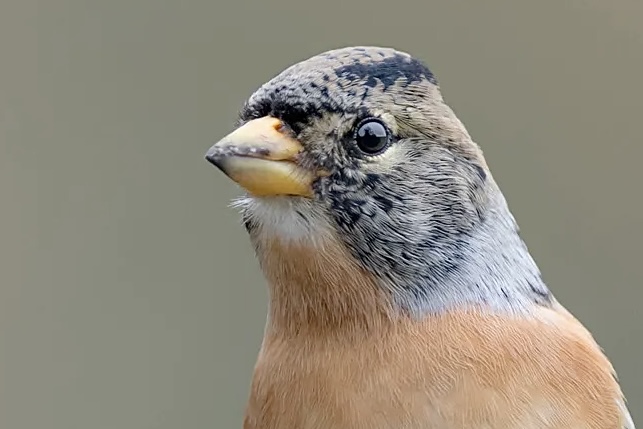
Bramblings are primarily winter visitors to the UK, migrating from Scandinavia and Russia , with only a small number ever breeding in the UK. They begin breeding in Scandinavia during May. The nest is usually built in a fork in a tree but can be built very low down in dense vegetation. 5-7 eggs are laid in this nest which are incubated by the female for 11-13 days while the male provides food. Once hatched, both parents work to feed the chicks for another 13 days before they leave the nest.
Flocks of Brambling in Europe can reach very large numbers with one flock in Slovenia recorded at 5 million bramblings in 2019.
In summer Brambling feed on beetles , insects and caterpillars supplementing these with seeds , nuts and berries during winter. They particularly like sunflower hearts and seed mixes in garden feeders and will often flock together with chaffinches to feed.
Conservation status
Classified as Green under the Birds of Conservation Concern , the Brambling is a common sight here in the UK forming large flocks during winter. Like most wildlife it is protected in law by the Wildlife and Countryside Act 1981.
©️ wildonline.blog 2026 , all rights reserved


 Wildonline.blog
1 reply »