
The Pochard – Aythya ferina
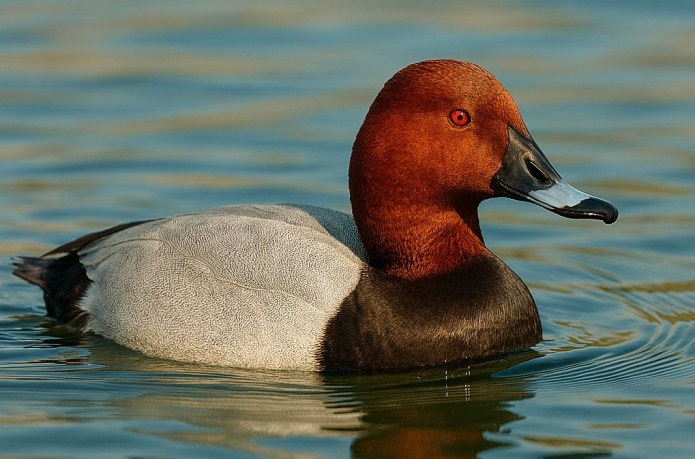
The pochard is a plump, medium-sized diving duck with a wingspan of up to 80cm. The male has a chestnut-coloured head and neck, a black breast and tail, and a pale grey body. The bill is dark grey, with a wide blue-grey band across the middle. The legs and feet are grey in both sexes and all ages.The female pochard has a plain grey-brown plumage. They are less vibrant than the males and can be easily confused with other duck species. The average life expectancy is typically around 3 years however the maximum recorded age from ringing being over 22 years
They are strong fliers and they can reach speeds of 50 miles per hour
Pochards are familiar winter visitors with approximately 30,000 birds arriving during the colder months. Most of these winter visitors are male Pochards who arrive from northern Europe and Russia. During the rest of the year, the UK hosts a smaller breeding population of around 500-750 pairs, primarily residing in England. Pochards can be found on various bodies of water however they prefer deeper, nutrient-rich waters found in lowland areas, which are ideal for diving and foraging.
When off the nest the female will cover the eggs with down
Pochards feed on plant material including seeds and grains , small fish, aquatic invertebrates and insects and molluscs. They feed primarily by diving to retrieve items from under the water’s surface; however, they will also upend and dabble at items on the water’s surface. They do most of their feeding at night.
The male Pochard moult their colourful feathers when the breeding season is over, and go into ‘eclipse’ plumage – a mottled grey-brown, just like the female. This helps to camouflage them from predators
The female builds a nest with a shallow cup lined with down feathers near its centre. This is placed either on the ground within 5m of the water’s edge or in the water with the platform rising above the water’s surface. It is always located in dense cover. The female lays one egg daily until the typical clutch of between 8 – 10 eggs is complete. Only then does she begin incubation. They are incubated by the female and hatch after around 25 days. The young once hatched can feed themselves. They fledge when aged 50–55 days. Levels of nest predation can be high, with the exception on those over water which do significantly better offering some protection from mammal predators .
Conservation status
The Pochard, like most wildlife here in the UK is protected in law by the Wildlife and Countryside Act 1981 , which makes it illegal to kill, injure, or disturb them in the UK. Listed as red under the Birds of Conservation Concern 5: the Red List for Birds (2021). Listed as vulnerable on the global IUCN Red List of Threatened Species.
©️ wildonline.blog 2026 , all rights reserved


 Wildonline.blog
Fantastic!
LikeLiked by 2 people