
The Brown Argus butterfly – Aricia agestis
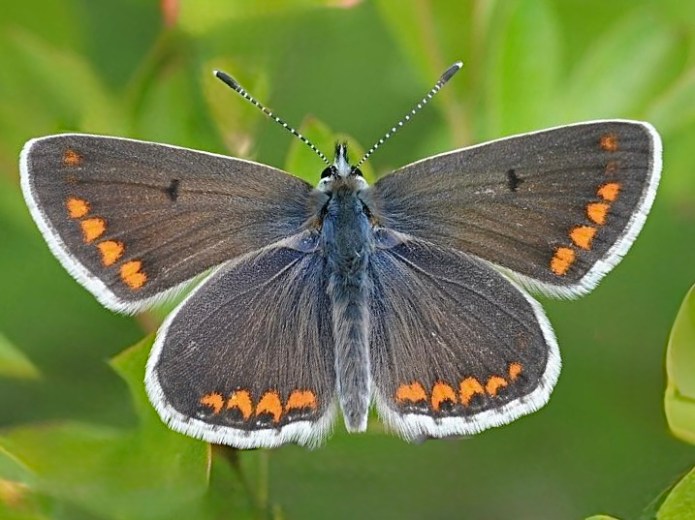
This small butterfly is characteristic of southern chalk and limestone grassland but occurs in a variety of other open habitats as far north as north Wales and Yorkshire. Adult Brown Angus butterflies have a silvery appearance as they fly and stop frequently to feed on flowers. They are very similar to Northern Brown Argus which usually have no orange spots on forewing. The main habitats are chalk and limestone grassland. However, the butterfly can occur in a range of habitats with disturbed soils including coastal grassland and dunes, woodland clearings, heathland, disused railway lines and road verges.
The Brown Argus is one of the so-called ‘blues’ that has no blue scales on its upperwings.
Adults of both sexes seek nectar at a wide variety of low growing flowers, the first brood favouring daisy, buttercup, bird’s foot trefoil, horseshoe vetch, common vetch, milkwort, dandelion and rockrose. Summer brood adults tend to congregate to nectar at clumps of marjoram at the base of hills. In late afternoon the butterflies roost communally on grass-heads, usually with the males and females forming separate groups. The roosting sites are often on the top of banks, where the adults are exposed to the last rays of the setting sun.
Males and females are similar in appearance but the males are smaller in size
The first males of the year emerge at the beginning of May with the females arriving about a week later. They have a very short adult life expectancy, with a maximum of two weeks , however the reality is normally less than one week. After mating the females roam randomly, searching for spots where the larval food plants grow in warm and sheltered positions. Disc-shaped whitish eggs are laid singly on the underside of leaves of common rockrose .The eggs hatch after about 7 days.
As the caterpillars from the first generation develop, they are tended by ants that take honey dew from them
The fully grown larva is green with a purple stripes. The chrysalis is formed in July on the ground, and is also attended by ants, which bury it just below the surface. It is dull olive in colour, marked with a pinkish lateral line. The second generation of adults emerges from mid July and continues well into August. Caterpillars resulting from this brood go into hibernation, This continues until February or March of the following year when they awake and resume feeding. They develop quickly, and pupate at the end of March.
©️ wildonline.blog 2026 , all rights reserved


 Wildonline.blog
NICE
LikeLike
Thank you Debs
LikeLiked by 1 person