
The White Wagtail – Motacila alba
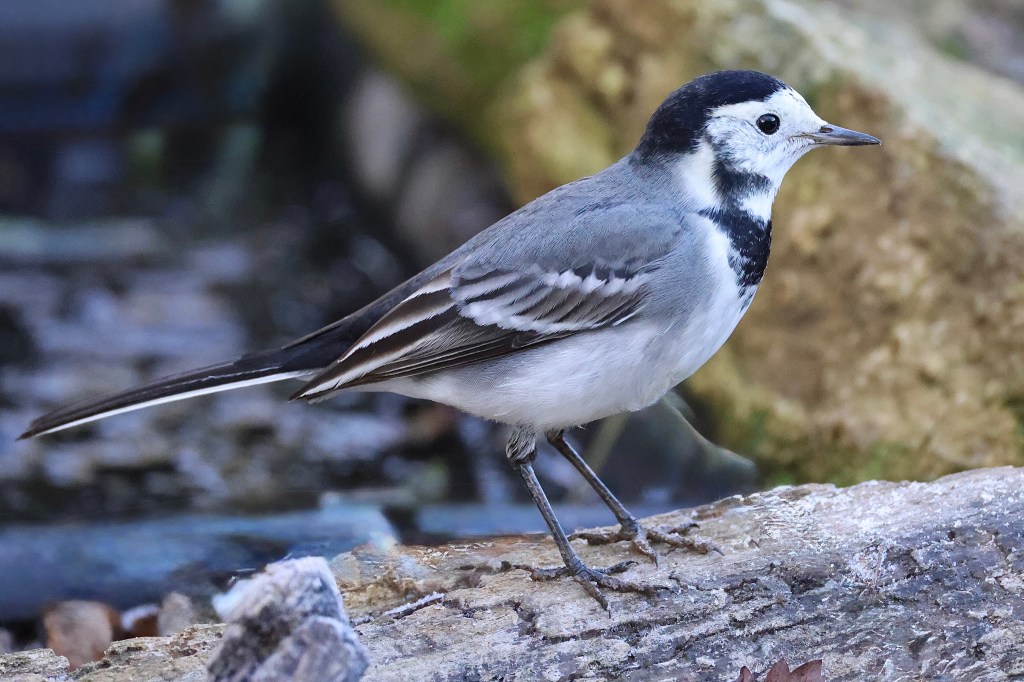
The White Wagtail is a familiar sight in the UK and across its vast Europe wide breeding range. These slender, long-tailed songbirds come in a remarkable variety of black, grey and white colour themes. They thrive in human settings, foraging for insects in parks and gardens and are a common sight around car parks and pedestrian streets.The white wagtail is a slender bird, 16 to 19 cm in length and weighing around 25g. It has a long life expectancy for a small bird with a maximum lifespan in the wild recorded in excess of 10 years.
White wagtails are monogamous and activly defend their breeding territory. The breeding season is from April to August, with both sexes responsible for building the nest which is a rough cup assembled from twigs, grass, leaves and other plant matter. It is lined with soft materials, including animal hair. The nest is set into a crevice or hole, traditionally in a bank next to a river or ditch, but the species has also adapted to nesting in walls, bridges and buildings. Three to eight eggs are laid , eggs are cream-coloured, often with a faint bluish-green or turquoise tint, and heavily spotted with reddish brown . Both parents incubate the eggs and they begin to hatch after 12 to 16 days. Both parents feed the chicks until they fledge in a further 12 and 15 days, and the chicks are fed for another week after fledging.
The composition of the diet of white wagtails varies by location, but terrestrial and aquatic insects and other small invertebrates form the major part of the diet. These range from beetles , small snails, spiders, worms, crustaceans and flys.
Conservation status
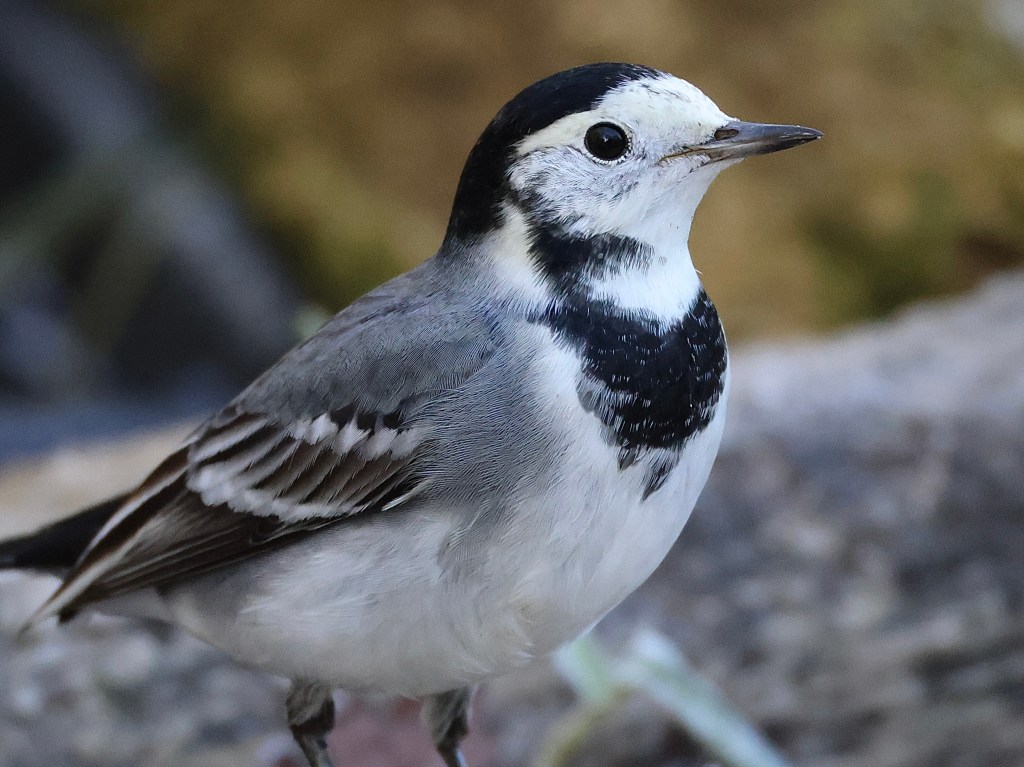
The species is currently classified as Green here in the UK under the Birds of Conservation Concern 5: the Red List for Birds (2021). They are protected in the UK under the Wildlife and Countryside Act, 1981.
©️ wildonline.blog 2025 , all rights reserved.


 Wildonline.blog
Interesting post and great shots!
LikeLike
Thank you Michael
LikeLike
You’re welcome.
LikeLike
I do love these. They seem friendly, a bit like long-tailed tits. Cute looking birds 😀
LikeLike
Thank you Paul , i now what you mean and a striking looking bird to boot
LikeLike
Cute bird ! 🙂
LikeLike
Thank you
LikeLike
You’re welcome.
LikeLike
very bat pic 👌
LikeLike
Lovely and so well named xx
LikeLike