
The Jay – Garrulus glandarius
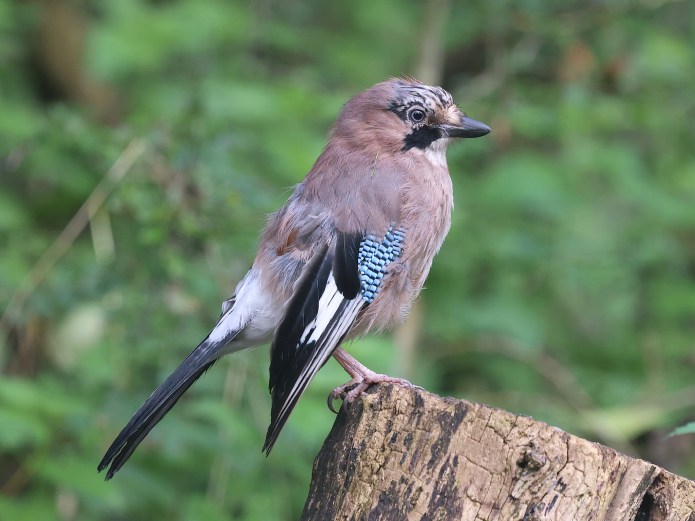
The Jay, a member of the crow family, is characterized by its vibrant colors and chatter. The genus name Garrulus reflects its noisy nature, while the secondary term glandarious highlights its tendency to favor acorns in its diet. These birds, belonging to the family Corvidae, are renowned for their striking appearance and vocal nature. Observing these timid , shy birds in their natural habitat is a delight for bird enthusiasts and nature lovers alike.
Jays are skilful mimics of other birds and animals. When threatened, they are likely to imitate the calls of tawny owls, sparrowhawks and even domestic cats
They are widespread across the UK, apart from northern Scotland, and are active throughout the year. They favour broadleaf woodland habitats but are also found in conifer woodland, scrub and urban areas. Jays are timid and shy birds most noticeable in autumn when they’re foraging for and burying acorns, but they can be seen all year round. Jays can be extremely territorial over both their food and nesting areas.
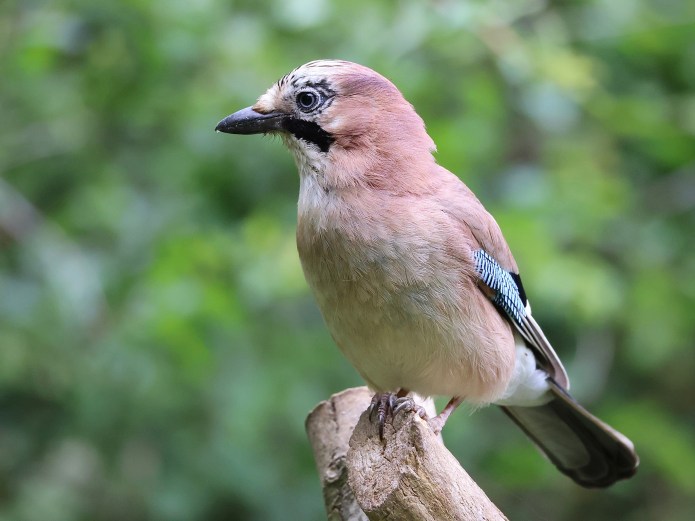
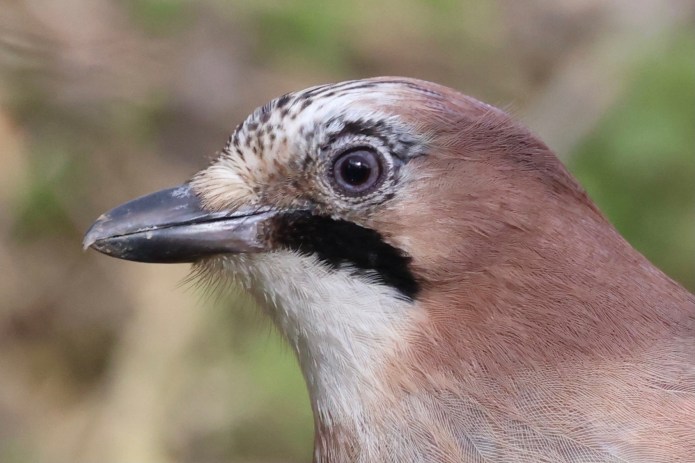
You’re likely to hear a jay before you see it – it has a characteristic ‘screeching’ call. It’s also a skilled mimic, sometimes copying the songs and calls of other birds. The jay has pale pink plumage, a black tail and white rump. Its head has a pale crown with black streaks, and black facial markings and bill. Its wings are black and white with a panel of distinctive electric-blue feathers. It has a wingspan of around 55cm and is 35cm from tail to beak. Average weight is between 140 – 180g .
A single jay can bury between 4,500 and 11,000 acorns a year and remember their location up to 10 months later
April is usually the beginning of the nesting period for jays. Pairs mate for life and work together to construct their messy-looking nests. Nests are built in trees and shrubs using twigs, with roots and hair for lining, where the female will lay four to five eggs. Eggs are incubated for 16 days, with chicks fledging at around 22 days old. The average life expectancy of the Jay is about four years, although there are records of birds surviving 16 to 18 years in the wild.
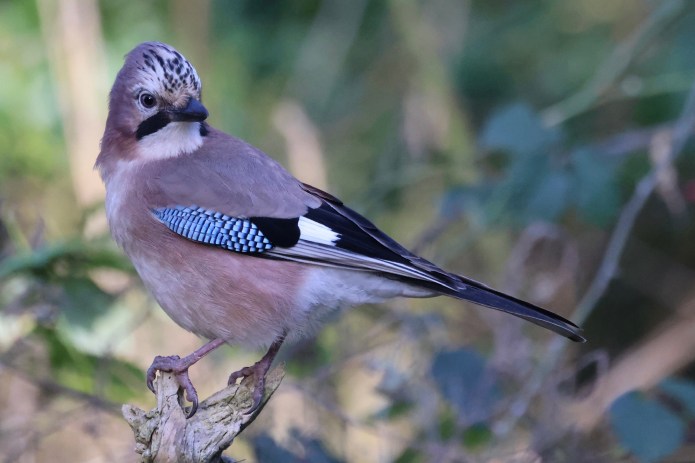
The Jay hop around on the ground in search of acorns. One specific characteristic of the Jay is their habit of hoarding and storing acorns for the winter period. Such behaviour has been linked to their high capacity and intelligence for anticipating different situations i.e. foresight and planning, a behaviour which distinguishes the Jay from other common garden birds.
In order to keep its feathers free of parasites, the Eurasian jay will cover itself in ants which release formic acid to kill any unwanted stragglers. This behavior is known as anting
Research has shown that Jays can hoard and retrieve several thousand acorns over winter. However, not all acorns are found again, which means some are left to grow into oak trees. Jays will also sometimes take eggs and young from other birds nests.
The Jays UK conservation status is currently green , with numbers remaining stable at around 170,000 breeding pairs. In winter numbers increase as migrants come to the UK from Continental Europe to escape their cold winters, migrants start to arrive in October to winter in our less severe climate. It’s protected here by the Wildlife and Countryside Act.
©️ wildonline.blog 2026 . All rights reserved


 Wildonline.blog
Beautiful birds, and I have only ever seen one in real life in the woods once… Yet my daughter has one who visits her tree lined garden often… Thank you for sharing
LikeLike