
The Redwing – Turdus iliacus
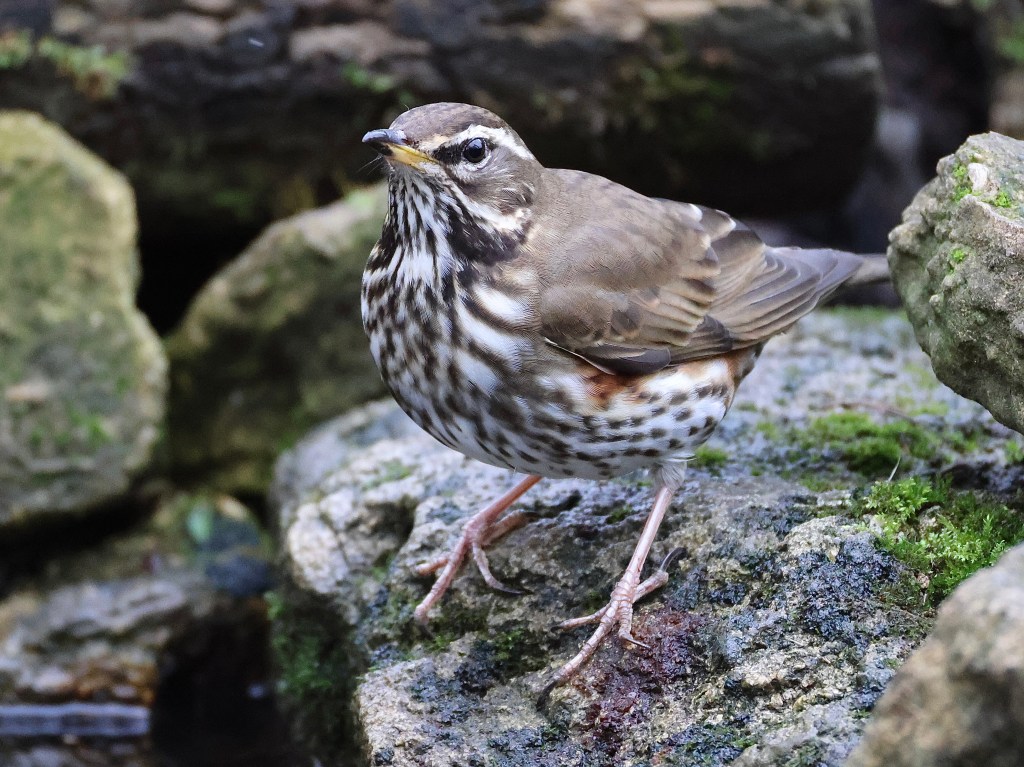
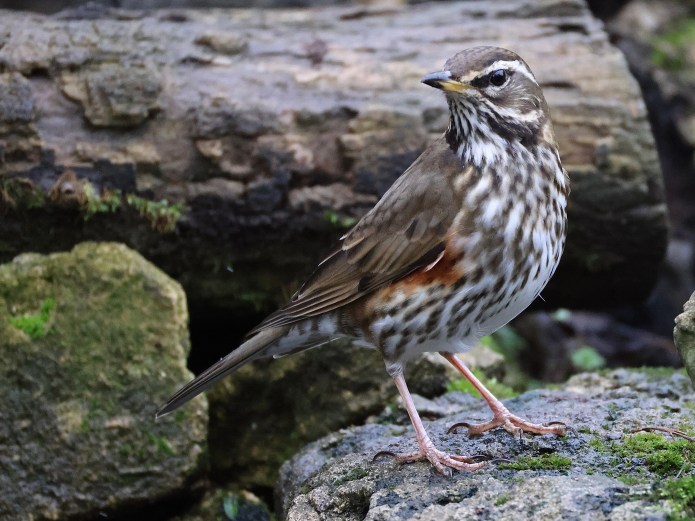
Our smallest thrush, it is a common winter visitor. The pale stripe over the eye and the red patch on its flanks help to identify this member of the Thrush family. Redwings are sociable birds and will generally form large flocks for migration and their time in the UK in the winter months. Often forming mixed flocks with Fieldfares. The first returning redwings are usually seen in Britain in late September, with the big movements taking place in October.
Unlike other subspecies of the Thrush family, Redwings unusually tend to nest on the ground.
The nest site can be in a tree, bush, rotten tree stump, or even direct on the ground on a bank. The nest is made of twigs, grass, lichen and moss, and sometimes with an inner lining of mud, with the final lining being normally made up of fine grass. The overall final structure makes a substantial cup, with only the female bird having taken part in the construction. There are one or two broods per year of 5-6 eggs, and again only the female carries out the task of incubation. Thankfully, the male bird does get involved in feeding the young, and shares this role with the female.

The diet is varied and includes snails, earthworms, slugs and insects, then progressively more berries and fallen fruit in the winter months. Hawthorn, holly and rowan berries are the native species which are eaten, but in gardens, parks and shopping centre car parks etc. then berries from ornamental shrubs including pyracantha and cotoneaster will readily be eaten.
The chicks fledge just 14 days after hatching, allowing the parents to have a second brood.
It is estimated that between 50-100 pairs nest in the northern areas of Scotland. For wintering birds in the UK, this is estimated population is around 690,000 birds. Classified as Amber in the UK under birds of conservation concern . as with most wildlife in the uk the Goldcrest is protected under the wildlife and countryside act , 1981.
©️ wildonline.blog 2025 , all rights reserved.


 Wildonline.blog
1 reply »