
The Pine Marten – Martes martes
by Graham Stewart

Once extremely common in Britain, The Pine Marten was persecuted to near extinction, by 1915 only small pockets of them remained. The decline was brought about by 3 main factors, they were hunted for their fur, game keepers culled them to minimise the effect of their predation and the reduction of their natural habitat (mainly coniferous and mixed forest). Thankfully their numbers are again on the increase with a strong population in Scotland and very slow increases in both Wales and Northern England. The species can also be found throughout Europe, Russia and Asia.
Pine martens are a member of the mustelid family, which means they’re related to badgers, otters, weasels and stoats. These animals mostly live very secretive, often solitary lives (with the exception of badgers who live in family groups), and can be found in a broad range of habitats. Pine martens are much bigger than stoats, and a little smaller than otters, about 75cm long including their slightly bushy tails
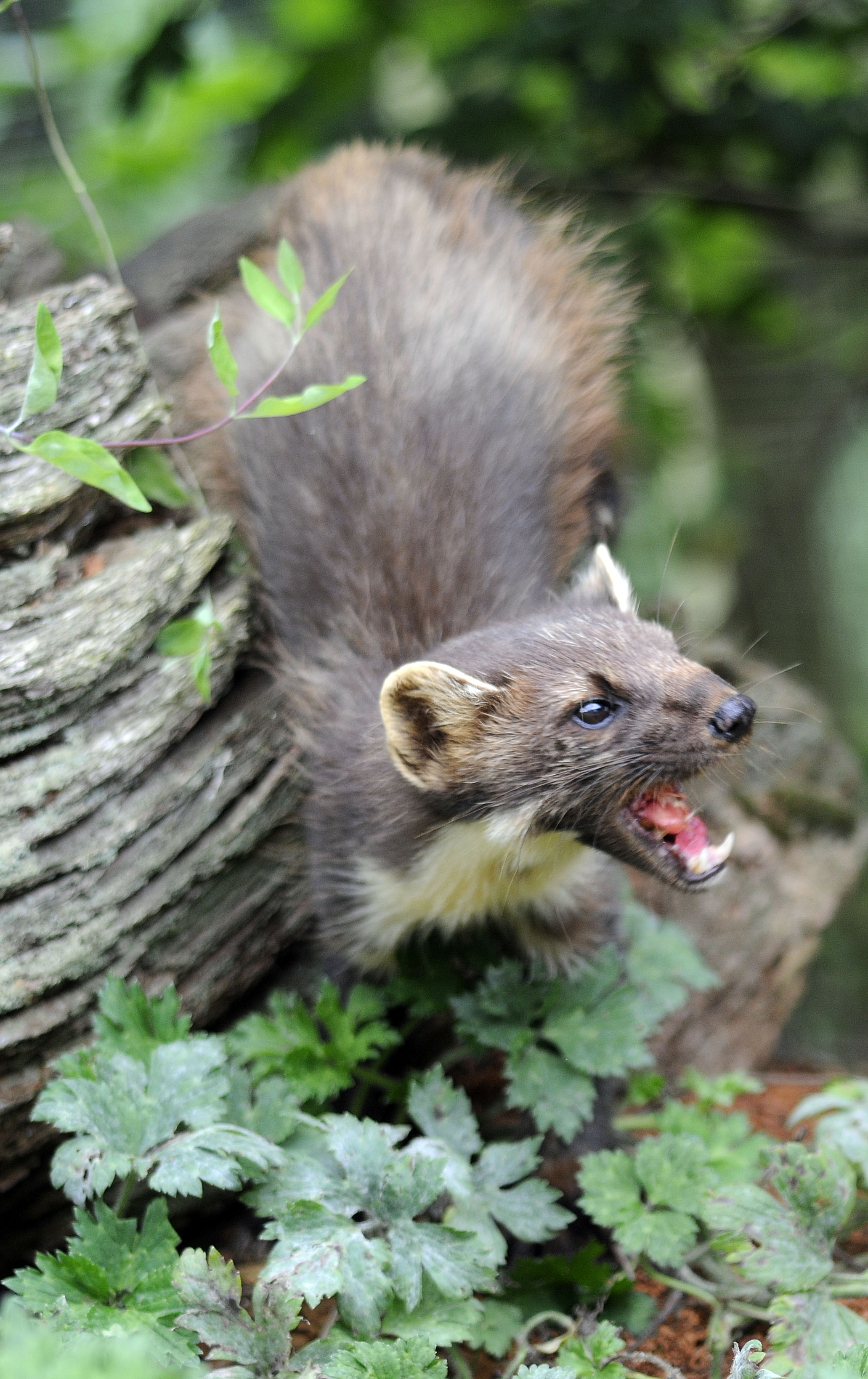
The Pine Marten has a dark brown coat with a creamy yellow patch around its throat. It is largely Nocturnal, and is extremely agile doing most of its hunting in trees. It makes its Den in a hole or crevice in rocks or trees. It is very territorial and marks its territory by leaving its scat (poo) in very prominent places to ward off other Martens.

Pine martens have quite a fierce reputation as predators, and are known to eat small mammals like mice and rats, as well as insects, roosting birds and birds’ eggs. But they’re actually omnivores, and will eat berries, apples and fungi depending on the time of year and what’s available. They’re also smart, opportunistic animals, and have learned to visit feeding stations left out for red squirrels, as well as bird feeders, where they’ll happily gobble up peanuts and fat.
Although pine martens eat red squirrels (when they can catch them) their slow comeback across Scotland seems to be having a remarkable and unexpected impact: it’s actually helping the red squirrels to make a comeback as well. Scientists aren’t entirely sure why this might be the case, and more research is needed to find all the answers. But one theory is that pine martens find invasive grey squirrels easier to catch than the nippy reds.
Pine martens are very secretive, and even if you live in an area with a good population, you may never see one. They’re mostly nocturnal, so if you think you have pine martens coming to your garden, you could always put up a camera trap to see if you could get a picture or a video. Places with feeding stations for red squirrels often see pine martens as well, even during the day, but other than that, seeing these wonderful animals is mostly about luck. Summer evenings and mornings are a good time to look, as these are the times when they’re most active in daylight. And remember to look up, as they do spend a lot of their lives in the branches.
Reproduction
Adults reach sexual maturity at 2-3 tears of age. Mating occurs in July/August although pregnancy does not start until January, this is known as “delayed implantation” and also occurs in Badgers. A single litter of 3-5 young, known as Kits will be born in April/May. The young are born blind and hairless and will not become fully independent until about 6 months. The male Pine Marten takes no part in rearing the young.
Predators
Foxes and Golden Eagles.
Conservation
Protected by Wildlife and Countryside Act 1981. Hunting or persecution is illegal however this does not stop the Pine Marten falling fowl of legal traps put down for other animals such as foxes.


 Wildonline.blog
1 reply »