
The Buzzard – Buteo buteo

By Graham Stewart
The Buzzard is now the most common and widespread of all the birds of prey in the UK despite the high mortality rate of its young

Diet:
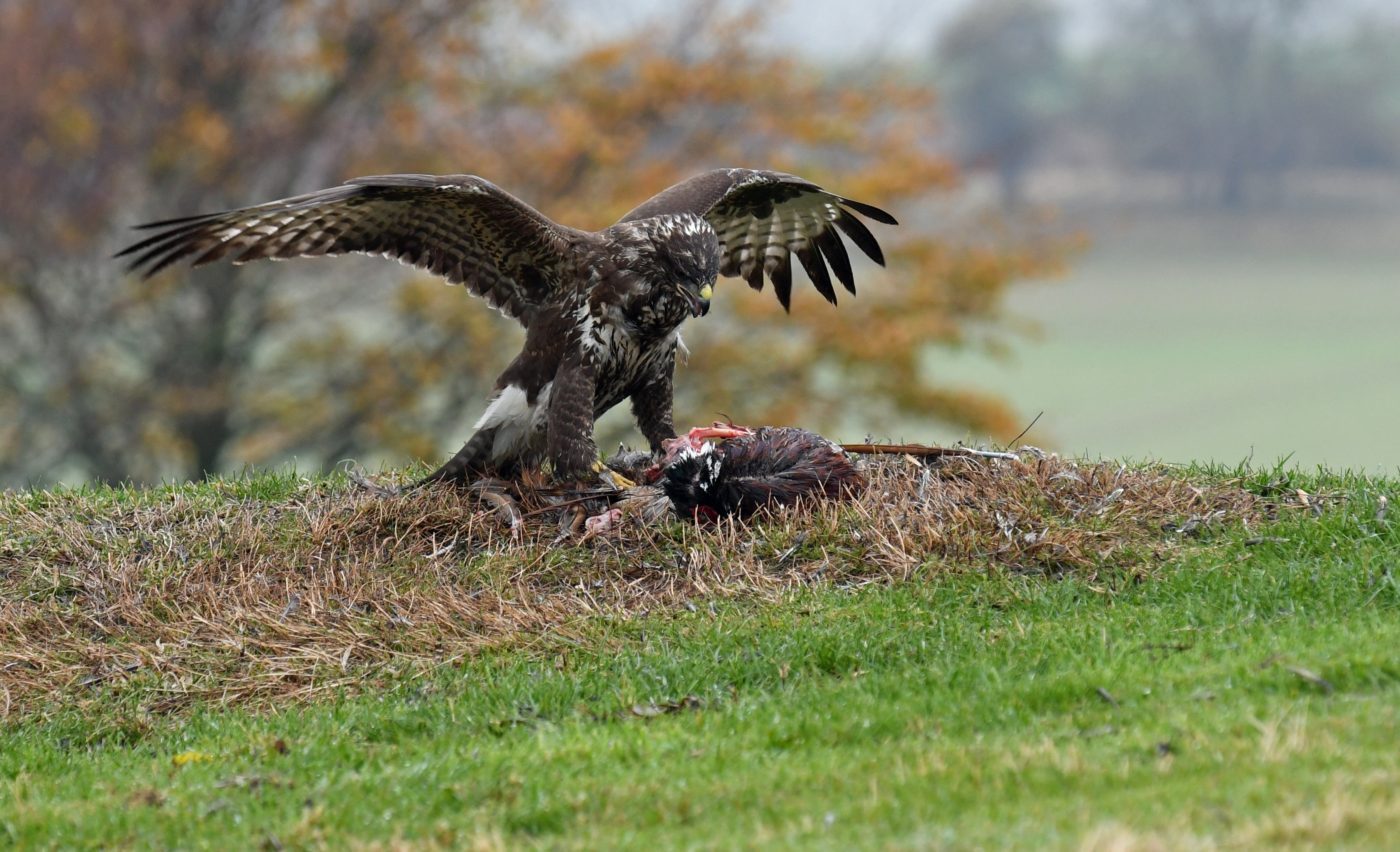
Being a slow flier the Buzzard does most of its hunting from a perch in a tree where it sits motionless, sometimes for hours waiting for something to pass below. Its main diet consists of small mammals, birds, carrion, earthworms and large insects.

Nest:
Generally in a tree, rocky crag or cliff side. Both birds play their part in building the nest which is made from twigs and branches. Nest size varys from approx. 1 meter in diameter when newly built up to 1.5m for a more established nest with a depth of approx. 60cm. It is quite usual for a pair of adults to have more than one nest site within their territory.
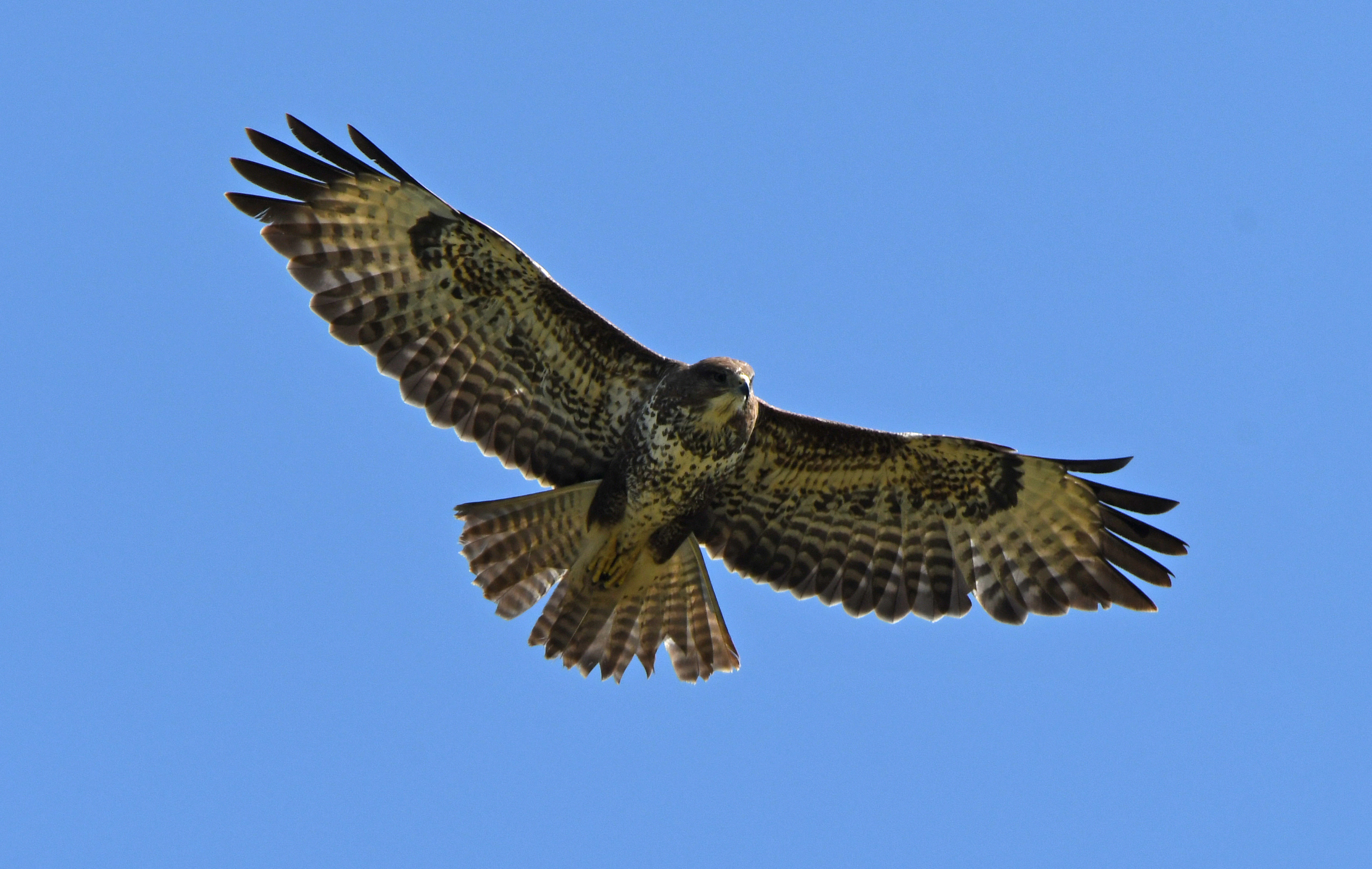
Brood of 2-4 eggs laid at 3 day intervals. Eggs are incubated for around 34 days with most of the work being done by the female. Chicks fledge around 50-55 days. They reach sexual maturity at 3 and the average life span is 8 years. Sadly some ¾ of young die at an early age generally due to starvation.
Classed as being on the Green list (least critical group) on the birds of conservation concern list the buzzard is fully protected under the Wildlife & Countryside Act 1981. Despite this and in common with other birds of prey illegal shooting and poisoning are its main threats as they were perceived to be harmful to game birds


 Wildonline.blog
Excellent photos and information…
LikeLike
Thank you Sue
LikeLike