
The Cormorant – Phalacrocorax carbo
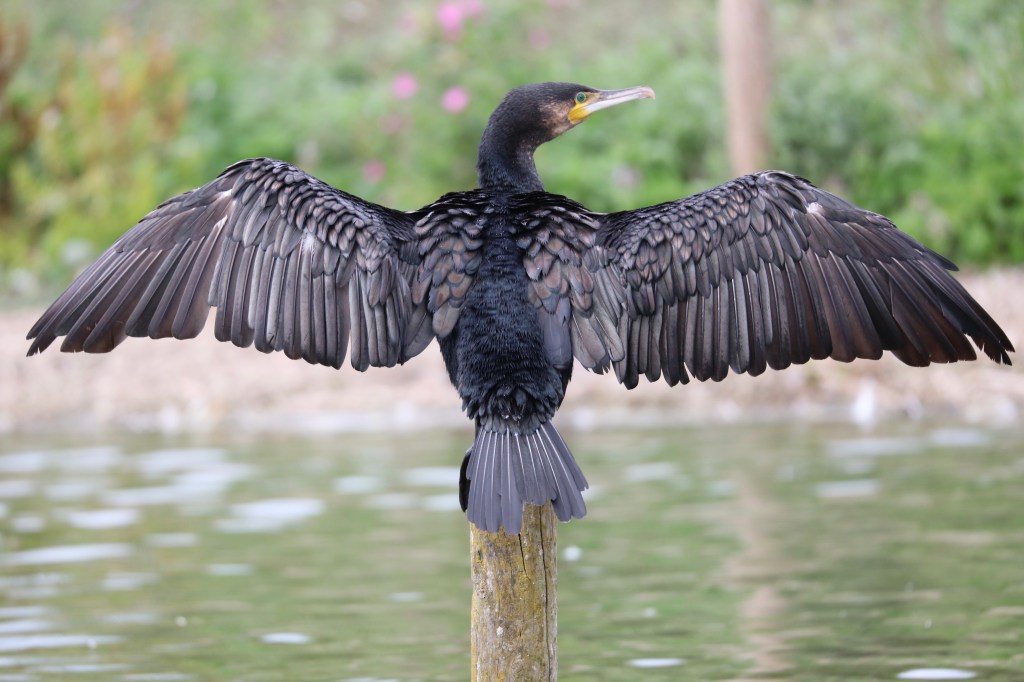
The Cormorant is a large, black waterbird whose size and colour make it very visible. With a reptilian neck, it has an almost prehistoric appearance. It is often seen standing with its wings held out to dry. Cormorants are supreme fishers which can bring them into conflict with fisherman and has seen them persecuted in the past. The UK holds internationally significant wintering numbers of cormorants when the breeding population of around 9,000 birds swells to over 40,000 individuals.
The name cormorant is thought to originate from the Latin words Corvus and Marinus meaning ‘sea crow’
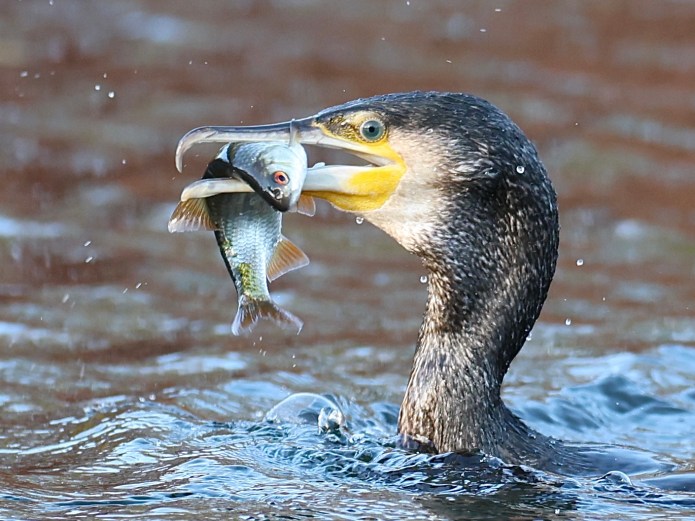
Cormorants feed on fish. Often hunting in groups, they catch prey with long hooked bills when underwater. They take a little leap before diving and swim low in the water with their heads tipped up. Despite being an agile underwater hunter, its feathers aren’t waterproof. In fact, wet feathers help this species to move quicker when on the prowl, reducing the bird’s buoyancy as it darts through the depths
Cormorants breed in colonies, sometimes building their nests on the ground. When courting, the male cormorant waves his long neck while the female bends her neck over her back. They lay one brood a year of two to four chalky blue eggs in mid-to-late February. Both parents incubate the eggs. Most chicks leave the nest after five weeks, but nearly half might die in their first year of starvation and exhaustion.
Conservation status
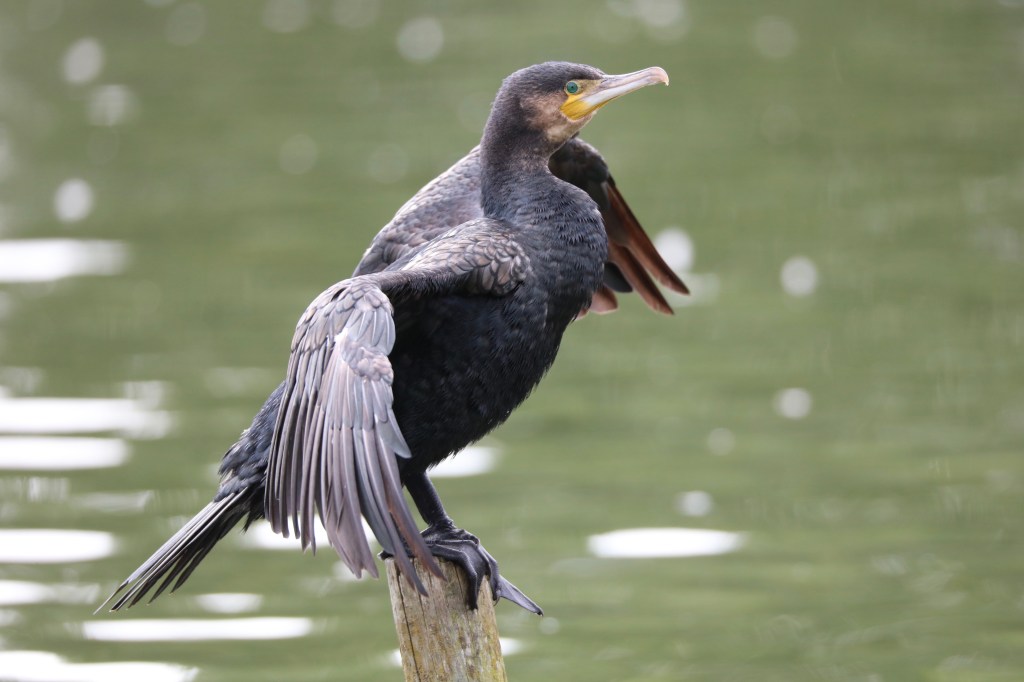
Green listed as a bird of least concern on the IUCN Red List and their population numbers are increasing.. As with most wildlife here in the uk , the Cormorant is protect in law by the the Wildlife and Countryside act 1981
©️ wildonline.blog 2026 , all rights reserved


 Wildonline.blog
Was he posing for you? Cause that last picture is amazing.
LikeLike
Thanks Jo, no pose I think I just got lucky
LikeLike